

Acquisition essay
Conflict at Its Edges
Permanent Collection
Five photographs made between 1952 and 2016 approach conflict through borders, sacred and domestic space, smoke, ruins, and uncertain aftermaths. Accession 6529NM.2026.002 is recorded as Conflict at Its Edges, five photographs from Magnum Photos 75.
Display and rights
These All Rights Reserved works are shown as part of the Museum’s permanent Collection. The Museum’s credited institutional display position does not transfer copyright or create a general reproduction licence. Read the display basis
Works in this study
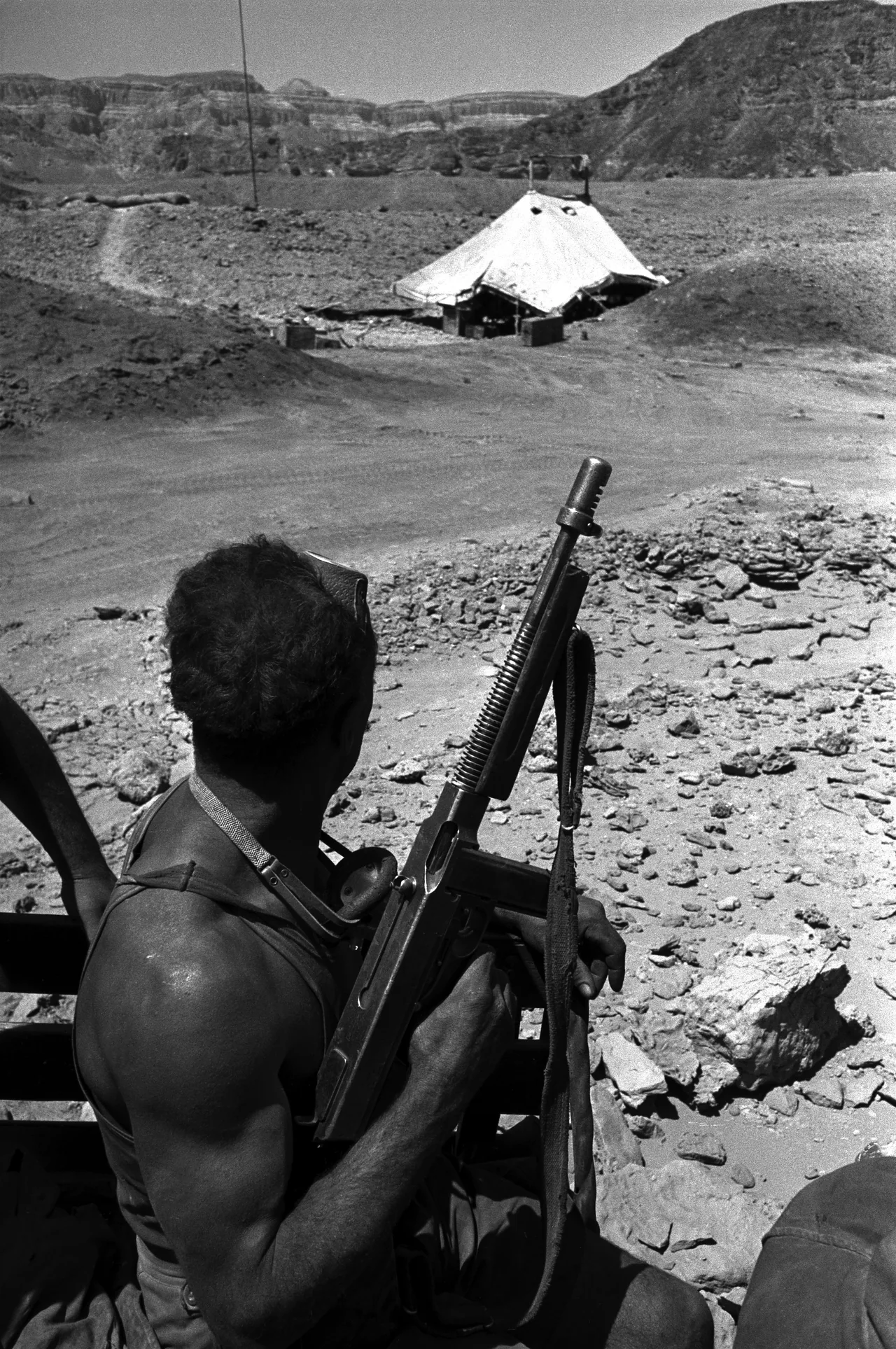
- InterpretsPatrolling the border between the Negev Desert and JordanAll Rights Reserved. Accession 6529NM.2026.002.Status Accessioned into the permanent CollectionStatus as ofDavid Seymour, Negev, 1952. © David Seymour/Magnum Photos 2022.
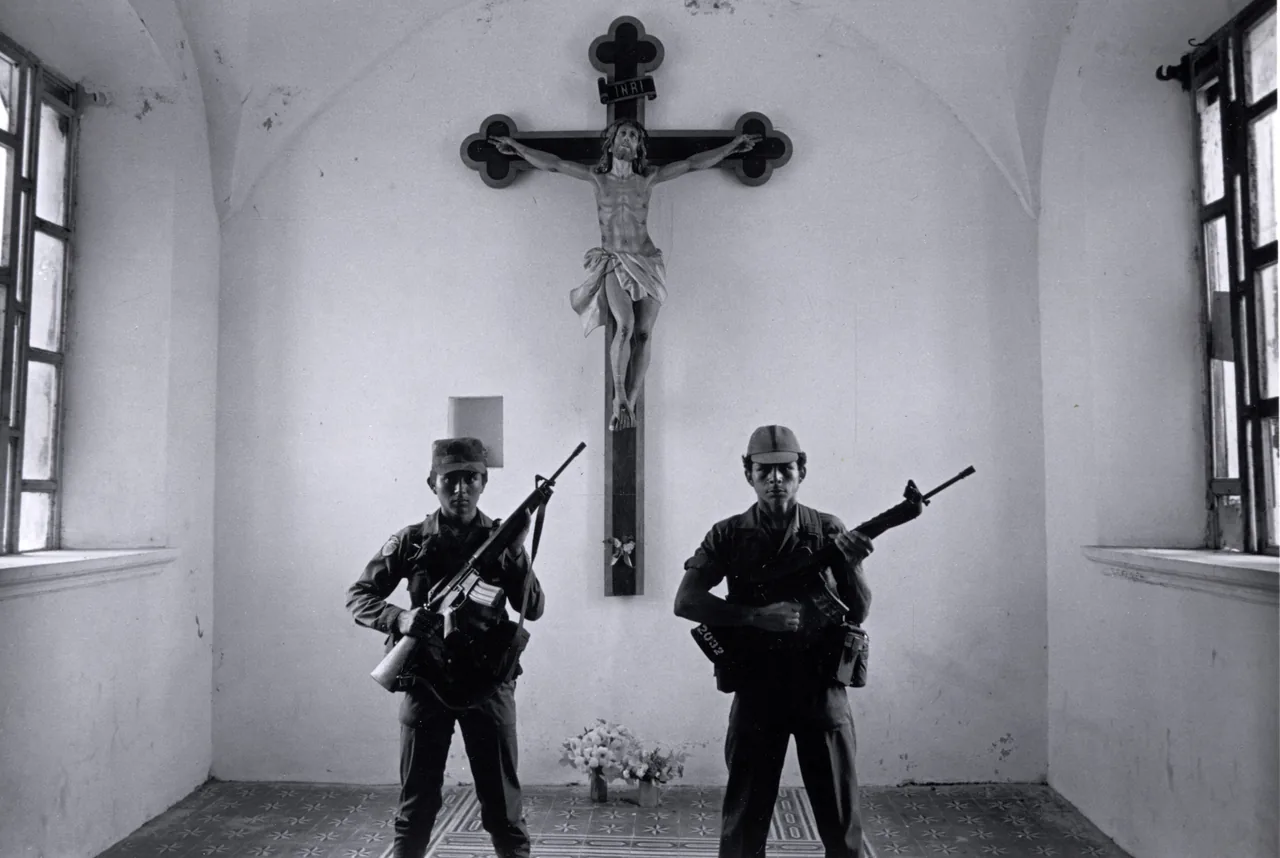 InterpretsGovernment soldiers in a church, Suchitoto, El SalvadorAll Rights Reserved. Accession 6529NM.2026.002.Status Accessioned into the permanent CollectionStatus as ofLarry Towell, Suchitoto, El Salvador, 1986. © Larry Towell/Magnum Photos 2022.
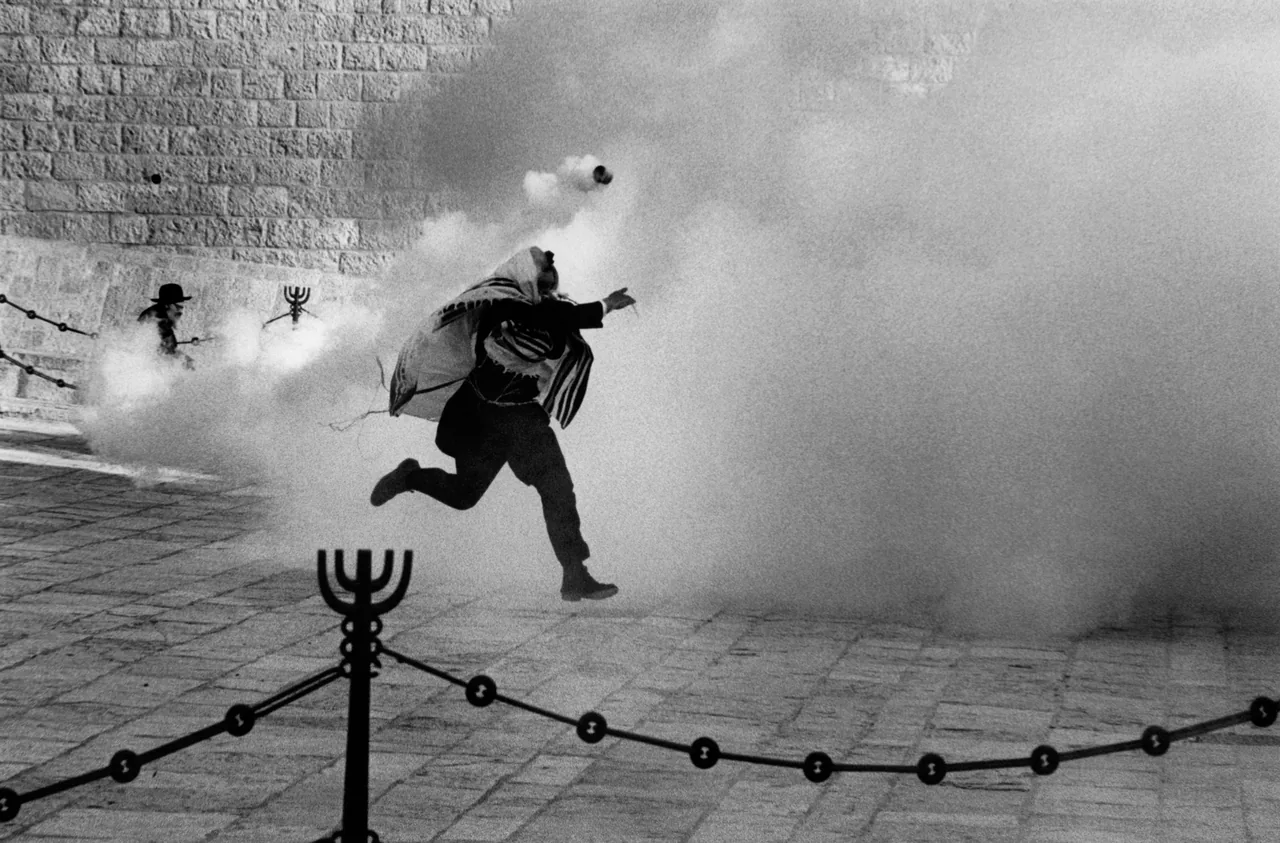 InterpretsDemonstration, Western Wall, JerusalemAll Rights Reserved. Accession 6529NM.2026.002.Status Accessioned into the permanent CollectionStatus as ofMicha Bar-Am, Jerusalem, 1989. © Micha Bar-Am/Magnum Photos 2022.
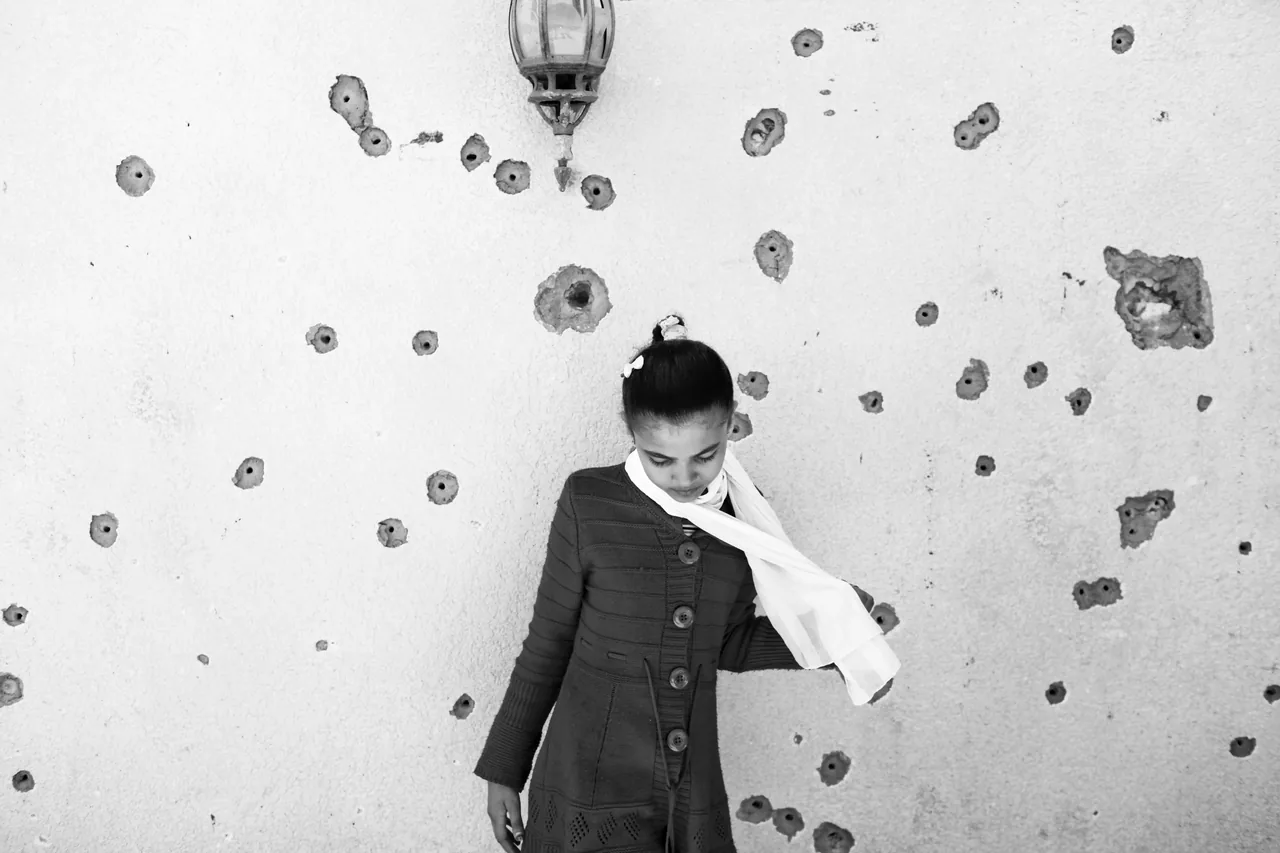 InterpretsTripoli, LibyaAll Rights Reserved. Accession 6529NM.2026.002.Status Accessioned into the permanent CollectionStatus as ofMoisés Saman, Tripoli, Libya, 2011. © Moisés Saman/Magnum Photos 2022.
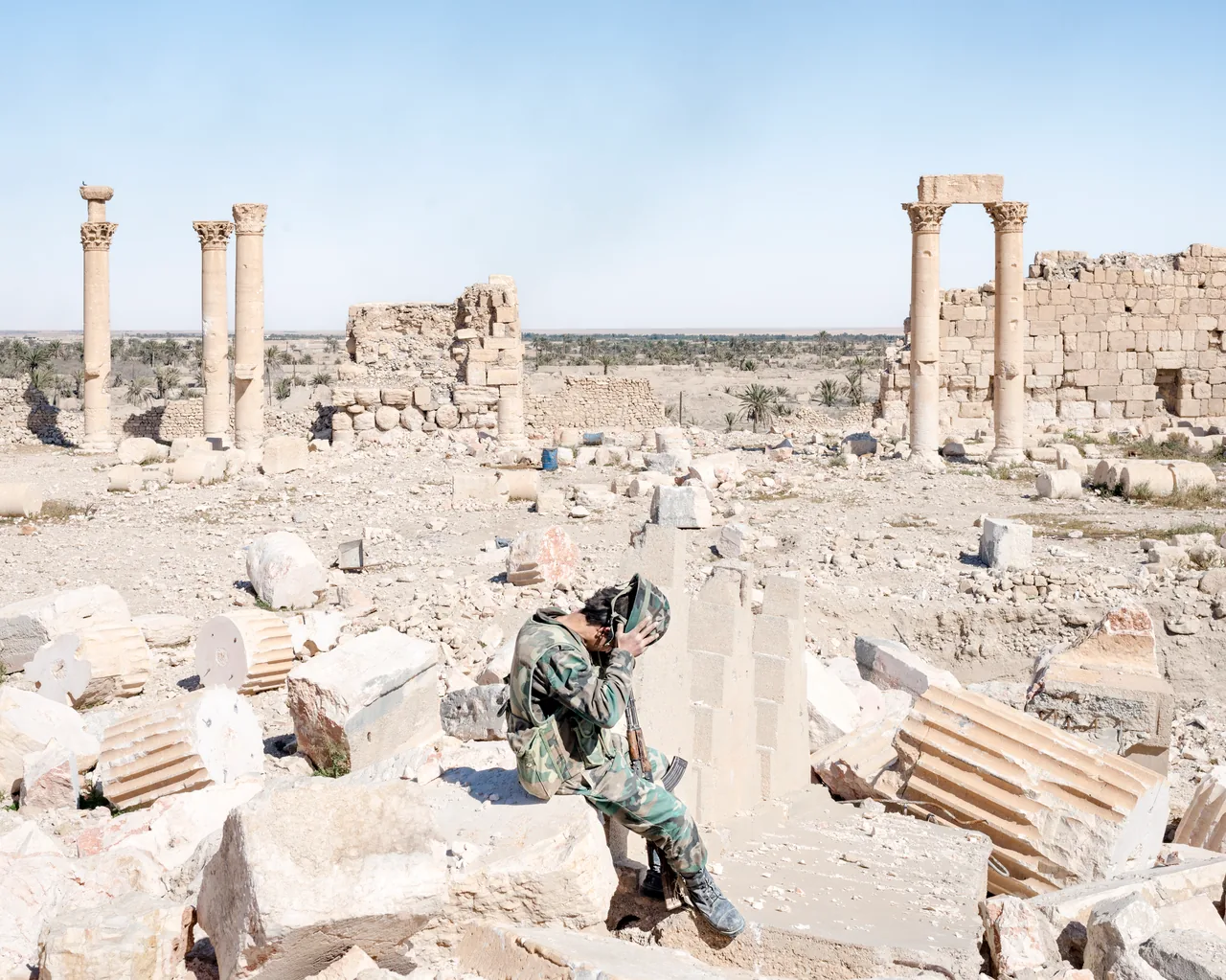 InterpretsPalmyra, SyriaAll Rights Reserved. Accession 6529NM.2026.002.Status Accessioned into the permanent CollectionStatus as ofLorenzo Meloni, Palmyra, Syria, 2016. © Lorenzo Meloni/Magnum Photos 2022.
Selected reading
This excerpt keeps the section numbers of the complete essay. Omitted sections remain available in the complete research record below.
Five Photographs of Borders, Access, and Afterlives, 1952–2016
These five photographs show conflict at a remove from battle. David Seymour looks across a borderland. Larry Towell places armed men inside a church. Micha Bar-Am photographs a public dispute through smoke and a barrier. Moisés Saman records an apparently young person before a wall marked by an uncertain event. Lorenzo Meloni encounters a soldier among the ruins of Palmyra after destruction and military recapture.
Made between 1952 and 2016, the photographs move from open terrain to enclosed and monumental space. Each tests the point at which visible evidence runs into something supplied elsewhere: a border named in a caption, a history of armed presence, a contested right of access, an official claim that could not be verified, or a route controlled by military authority. Their later passage through books, archives, museums, metadata, and tokens adds another history to the one held in the frame.
The proposal brings the group together across two Magnum Photos 75 curations. Saman’s #44
is marked 1/; Seymour #127, Towell #145, Bar-Am #97, and Meloni #104 are
marked 2/. Those curation fields describe the upstream publication history
of each token. The five-work argument begins with their later conjunction.
A border named from a distance
Seymour’s vertical black-and-white photograph begins with a figure turned away. A rifle rises from the lower edge along the body and points toward open country. A canvas shelter and a dark foreground mass occupy a narrow portion of the image; ridges recede toward a pale horizon.
The photograph gives the viewer terrain, posture, equipment, and distance. It withholds a border marker, map coordinate, flag, unit, and named incident. The caption supplies the Negev–Jordan border, while the landscape remains politically legible through scale and separation. The border exists in the relation between the administrative name and the image’s sparse physical evidence.
The estate’s public record offers a visually matching frame associated with the King Solomon’s Mines area. The Magnum archive reference is SED1952003W00003/; the estate filename has not been cross-indexed to it in a reviewed archival record. The 1949 Israel–Jordan General Armistice Agreement and United States Department of State records establish the frontier’s historical framework and 1952 incidents. They do not identify this patrol or settle the precise site.
Seymour’s place in Magnum adds another afterlife. A founding-generation photographer whose postwar practice moved through war, displacement, children, and reconstruction, he made the individual figure carry political pressure without turning the body into a simple emblem. The selected frame begins the group with a border that must be inferred through the meeting of body, weapon, terrain, caption, and archive.
Armed presence in sacred architecture
Towell’s church interior changes the photograph’s scale. A crucifix fixes the upper centre, the altar and flowers occupy the lower centre, and two soldiers stand on either side of the central axis. Their rifles interrupt the building’s vertical order. Daylight enters through windows at both sides, giving the room depth and keeping the architecture active around the men.
The image offers a church, weapons, bodies, light, and a named place. It leaves the congregation, unit, operation, and exact church outside the frame. The issuer metadata spells the place “Suchitito”; other public records use “Suchitoto.” The difference shows how documentary place-names pass through successive systems of transcription, correction, and publication.
United Nations peace-process records provide the civil-war setting. They do not identify the church or Towell’s assignment. His long-form work in Nicaragua, Guatemala, and El Salvador gives the image a further duration through exhibitions, books, and testimony. The physical-print record for Soldiers in Church, Suchitoto, El Salvador offers a material comparison, while the public evidence has not completed the crosswalk between that print and the token-linked JPEG.
The church therefore becomes an edge of access and authority. Armed men stand inside a sacred interior; the camera occupies a position from which the room can be measured; the caption supplies a regional history that the architecture alone cannot name.
Smoke, access, and the interrupted event
Bar-Am’s photograph is organized around obstruction. A figure moves through the middle distance, partly veiled by smoke. A canister hangs in the air. The Western Wall forms a dense horizontal background, while a metal structure crosses the lower edge like both foreground object and barrier.
The photograph makes an event visible through its interruption. Smoke opens and closes the central action. The moving figure remains partial. The wall identifies a sacred site, yet the image cannot name the exact day or person. The archive string BAM1989009W02477/ differs from the artist archive’s BAM1989009W02477-, and later museum records preserve title variants. The image’s public identity has accumulated through several cataloguing acts.
The issuer caption connects the frame to women’s Torah prayer and police smoke grenades. Women of the Wall’s own history supplies a situated account of the dispute over prayer, gender, and access at the Wall. That context sharpens the photograph’s social stakes while leaving the central person’s identity open. The image holds a religious site, a contested practice, and an obstructed view in the same field.
Bar-Am’s broader practice moves between military experience, newspaper work, Magnum correspondence, and institution-building. He helped establish the International Center of Photography and founded the Tel Aviv Museum of Art’s photography department. That history explains the density of records now attached to the photograph. The frame itself remains more austere: a moving person, smoke, a canister, stone, and a metal barrier.
The ruin after destruction
Meloni’s colour photograph opens the field again. Pale rubble and surviving columns spread beneath a clear blue sky. A small seated soldier gathers the lower portion of the image, holding a helmet across his face. The gesture is obscured and difficult to read; the monument determines the image’s scale.
The contemporary caption dates the photograph to 1 April 2016 and identifies the figure as a Syrian army soldier seated on rubble associated with the former Temple of Bel. UNESCO records the temple’s principal destruction on 30 August 2015 and describes Palmyra after the March 2016 change of control, when access remained constrained and demining incomplete. The image was made months after the destruction and days after the recapture.
TIME reports government permission and the shadowing of journalists by government forces. AFP describes an army minder, mine warnings, and entry directed by the army. Those accounts surround the frame with a route of access. The photograph’s apparent stillness is therefore joined to the conditions under which the ruins could be entered and photographed.
Meloni’s We Don’t Say Goodbye gathers a wider project across Iraq, Syria, and Libya and interrupts photographs with objects and writing recovered from rubble. The public record has not established that this frame appears in the book. The project nevertheless gives context to Meloni’s sustained attention to fragments, recurrence, and the historical uses of damaged sites. At Palmyra, a soldier’s obscured face keeps the scene between report, memorial, and controlled passage.
The case and its limit
The case for the group lies in the specificity of its comparisons. Seymour’s border is named from beyond the frame. Towell’s church turns armed presence into a spatial problem. Bar-Am’s smoke makes access and visibility coincide. Saman’s marked wall exposes the gap between official narration and visible trace. Meloni’s ruin holds an unreadable gesture inside a controlled historical site.
The countercase remains substantial. The group may smooth differences among conflicts that demand separate histories. Its title may make damage appear as a shared aesthetic category. The upstream project’s curations had their own premises, and the donor’s relation overrides those original boundaries. Caption gaps, archive discrepancies, rights uncertainty, and Saman’s safeguarding condition limit the claims the group can make.
The response is a disciplined form of comparison. The five photographs can remain distinct while showing how documentary meaning travels through borders, access routes, captions, damaged sites, and later records. The group should be read as a revisable curatorial proposition, with its formation and limits stated alongside its argument.
Read the complete studyOpen the full essay, notes, bibliography, and publication record.
6529 Network Museum, Curatorial Research · Edition 1.0.0 · Published 9 August 2026 · Research through 9 August 2026 · Publication record and suggested citation
Five Photographs of Borders, Access, and Afterlives, 1952–2016
These five photographs show conflict at a remove from battle. David Seymour looks across a borderland. Larry Towell places armed men inside a church. Micha Bar-Am photographs a public dispute through smoke and a barrier. Moisés Saman records an apparently young person before a wall marked by an uncertain event. Lorenzo Meloni encounters a soldier among the ruins of Palmyra after destruction and military recapture.
Made between 1952 and 2016, the photographs move from open terrain to enclosed and monumental space. Each tests the point at which visible evidence runs into something supplied elsewhere: a border named in a caption, a history of armed presence, a contested right of access, an official claim that could not be verified, or a route controlled by military authority. Their later passage through books, archives, museums, metadata, and tokens adds another history to the one held in the frame.
The proposal brings the group together across two Magnum Photos 75 curations. Saman’s #44
is marked 1/; Seymour #127, Towell #145, Bar-Am #97, and Meloni #104 are
marked 2/. Those curation fields describe the upstream publication history
of each token. The five-work argument begins with their later conjunction.1
A border named from a distance
Seymour’s vertical black-and-white photograph begins with a figure turned away. A rifle rises from the lower edge along the body and points toward open country. A canvas shelter and a dark foreground mass occupy a narrow portion of the image; ridges recede toward a pale horizon.
The photograph gives the viewer terrain, posture, equipment, and distance. It withholds a border marker, map coordinate, flag, unit, and named incident. The caption supplies the Negev–Jordan border, while the landscape remains politically legible through scale and separation. The border exists in the relation between the administrative name and the image’s sparse physical evidence.
The estate’s public record offers a visually matching frame associated with the King Solomon’s Mines area. The Magnum archive reference is SED1952003W00003/; the estate filename has not been cross-indexed to it in a reviewed archival record. The 1949 Israel–Jordan General Armistice Agreement and United States Department of State records establish the frontier’s historical framework and 1952 incidents. They do not identify this patrol or settle the precise site.2
Seymour’s place in Magnum adds another afterlife. A founding-generation photographer whose postwar practice moved through war, displacement, children, and reconstruction, he made the individual figure carry political pressure without turning the body into a simple emblem. The selected frame begins the group with a border that must be inferred through the meeting of body, weapon, terrain, caption, and archive.
Armed presence in sacred architecture
Towell’s church interior changes the photograph’s scale. A crucifix fixes the upper centre, the altar and flowers occupy the lower centre, and two soldiers stand on either side of the central axis. Their rifles interrupt the building’s vertical order. Daylight enters through windows at both sides, giving the room depth and keeping the architecture active around the men.
The image offers a church, weapons, bodies, light, and a named place. It leaves the congregation, unit, operation, and exact church outside the frame. The issuer metadata spells the place “Suchitito”; other public records use “Suchitoto.” The difference shows how documentary place-names pass through successive systems of transcription, correction, and publication.
United Nations peace-process records provide the civil-war setting. They do not identify the church or Towell’s assignment. His long-form work in Nicaragua, Guatemala, and El Salvador gives the image a further duration through exhibitions, books, and testimony. The physical-print record for Soldiers in Church, Suchitoto, El Salvador offers a material comparison, while the public evidence has not completed the crosswalk between that print and the token-linked JPEG.3
The church therefore becomes an edge of access and authority. Armed men stand inside a sacred interior; the camera occupies a position from which the room can be measured; the caption supplies a regional history that the architecture alone cannot name.
Smoke, access, and the interrupted event
Bar-Am’s photograph is organized around obstruction. A figure moves through the middle distance, partly veiled by smoke. A canister hangs in the air. The Western Wall forms a dense horizontal background, while a metal structure crosses the lower edge like both foreground object and barrier.
The photograph makes an event visible through its interruption. Smoke opens and closes the central action. The moving figure remains partial. The wall identifies a sacred site, yet the image cannot name the exact day or person. The archive string BAM1989009W02477/ differs from the artist archive’s BAM1989009W02477-, and later museum records preserve title variants. The image’s public identity has accumulated through several cataloguing acts.
The issuer caption connects the frame to women’s Torah prayer and police smoke grenades. Women of the Wall’s own history supplies a situated account of the dispute over prayer, gender, and access at the Wall. That context sharpens the photograph’s social stakes while leaving the central person’s identity open. The image holds a religious site, a contested practice, and an obstructed view in the same field.4
Bar-Am’s broader practice moves between military experience, newspaper work, Magnum correspondence, and institution-building. He helped establish the International Center of Photography and founded the Tel Aviv Museum of Art’s photography department. That history explains the density of records now attached to the photograph. The frame itself remains more austere: a moving person, smoke, a canister, stone, and a metal barrier.
Marks beneath a qualified caption
Saman brings the group into a shallow interior. An apparently young person stands close to a pale wall beneath a caged lamp. Dark marks interrupt the wall’s surface. The lowered head keeps the body present while withholding a public identity. The wall occupies enough of the frame to resist becoming a backdrop.
The photograph shows marks, a lamp, a wall, and an apparently young person. It cannot establish the cause of the marks. The issuer metadata preserves two related statements: an official account says that the house was targeted by Western air strikes and that a woman was injured, while a separate account describes minders showing journalists evidence of strikes against civilian areas. The first account is explicitly marked impossible to verify. The second concerns what the minders presented. The two statements should remain distinct from the visible wall.
The conditions of access matter here. Saman’s Libya work was made within a press environment shaped by government management, confinement, escorts, and restricted movement. TIME and the Committee to Protect Journalists provide the surrounding record. The photographer’s access to a damaged interior was part of a managed field of information.5
Saman’s photograph therefore places caption authority beside visual evidence. Public description can remain with the person, wall, lamp, and marks. The reviewed public record supplies no age, identity, or consent documentation for the person shown. A fuller identification would require authoritative evidence and a responsible reason to publish it.
The ruin after destruction
Meloni’s colour photograph opens the field again. Pale rubble and surviving columns spread beneath a clear blue sky. A small seated soldier gathers the lower portion of the image, holding a helmet across his face. The gesture is obscured and difficult to read; the monument determines the image’s scale.
The contemporary caption dates the photograph to 1 April 2016 and identifies the figure as a Syrian army soldier seated on rubble associated with the former Temple of Bel. UNESCO records the temple’s principal destruction on 30 August 2015 and describes Palmyra after the March 2016 change of control, when access remained constrained and demining incomplete. The image was made months after the destruction and days after the recapture.6
TIME reports government permission and the shadowing of journalists by government forces. AFP describes an army minder, mine warnings, and entry directed by the army. Those accounts surround the frame with a route of access. The photograph’s apparent stillness is therefore joined to the conditions under which the ruins could be entered and photographed.
Meloni’s We Don’t Say Goodbye gathers a wider project across Iraq, Syria, and Libya and interrupts photographs with objects and writing recovered from rubble. The public record has not established that this frame appears in the book. The project nevertheless gives context to Meloni’s sustained attention to fragments, recurrence, and the historical uses of damaged sites. At Palmyra, a soldier’s obscured face keeps the scene between report, memorial, and controlled passage.
Two curations, one later relation
Magnum Photos 75 gives the group its upstream vocabulary. The archived launch material associates the first selection with Alejandro Cartagena. The second selection was presented in dialogue with Azu Nwagbogu and described through the idea of an “indecisive moment.” The token metadata places Saman’s #44 in 1/ and the other four works in 2/.7
That distribution is evidence of the individual tokens’ publication histories. It does not supply the donor’s reason for choosing these five. The proposal assembled a new relation across the registers. The reviewed public records contain no statement or evidence that Magnum Photos, either curator, or the artists endorsed the group.
This distinction matters because the group’s coherence is interpretive. Its title belongs to the Museum’s publication of a proposition first presented through the offer. Its five photographs retain their own authors, captions, archives, and political histories. The essay can place them beside one another while keeping their different forms of evidence intact.
The case and its limit
The case for the group lies in the specificity of its comparisons. Seymour’s border is named from beyond the frame. Towell’s church turns armed presence into a spatial problem. Bar-Am’s smoke makes access and visibility coincide. Saman’s marked wall exposes the gap between official narration and visible trace. Meloni’s ruin holds an unreadable gesture inside a controlled historical site.
The countercase remains substantial. The group may smooth differences among conflicts that demand separate histories. Its title may make damage appear as a shared aesthetic category. The upstream project’s curations had their own premises, and the donor’s relation overrides those original boundaries. Caption gaps, archive discrepancies, rights uncertainty, and Saman’s safeguarding condition limit the claims the group can make.
The response is a disciplined form of comparison. The five photographs can remain distinct while showing how documentary meaning travels through borders, access routes, captions, damaged sites, and later records. The group should be read as a revisable curatorial proposition, with its formation and limits stated alongside its argument.
Documentary afterlives
A photograph’s afterlife begins before the Museum sees it. It passes through an assignment, a caption, a negative, a print, a book, an exhibition, an estate, or an agency archive. Magnum Photos 75 adds token numbers, metadata objects, Arweave pointers, edition language, and transaction histories. Those records give the photographs a new technical route into public circulation.
The token-linked JPEGs remain upstream manifestations with photographer and Magnum All Rights Reserved notices. Token identity, legal title, copyright, display permission, preservation, and Museum custody remain separate records. The chain can stabilize an edition and its transfer history while leaving the archive-to-negative relation, first publication, and reproduction authority open.8
The historical Wave publication and token metadata remain part of that record.
Their artist and Magnum credits and All Rights Reserved notices travel with
every citation. The Museum has preserved their identity and context without
turning those sources into a claim of copyright, custody, or accession.8
The five photographs describe violence at its margins and show how documentary authority is made: by what enters the frame, by who grants access, by the words attached afterward, and by the institutions that keep an image in circulation. The catalogue keeps four layers distinct: what appears in the frame, what the contemporary caption adds, what later research establishes, and what remains unresolved.
Footnotes
-
Exact Magnum 75 metadata and proposal record, S04–S05, S10–S14, and S37. ↩
-
David Seymour estate, ICP, United Nations, and United States Department of State records, S18–S19 and S42–S43. ↩
-
Larry Towell, United Nations, exhibition, CV, library, and collection records, S11, S20–S21, S33, S45–S47, and S52. ↩
-
Micha Bar-Am archive, ICP, Museum Wales, and Women of the Wall records, S12, S22–S25, and S34. ↩
-
Moisés Saman metadata, biography, controlled-access reporting, and press-freedom context, S13 and S26–S29. ↩
-
Lorenzo Meloni, TIME, UNESCO, and AFP records, S14, S30–S32, and S41. ↩
-
Magnum 75 launch, second-release context, and exact token metadata, S04–S05 and S10–S14. ↩
-
Magnum terms, token metadata, proposal evidence, and historical Wave media record, S09, S10–S14, S37, and S38. ↩ ↩2
Research context
Research context
- InterpretsMagnum Photos
- InterpretsMagnum Photos 75
- InterpretsDavid Seymour
- InterpretsLarry Towell
- InterpretsMicha Bar-Am
- InterpretsMoisés Saman
- InterpretsLorenzo Meloni