

Acquisition essay
The System in Seven States
Permanent Collection
Seven works by Casey Reas show how a system can produce images with sharply different structures, textures, and tempos.
Works in this study
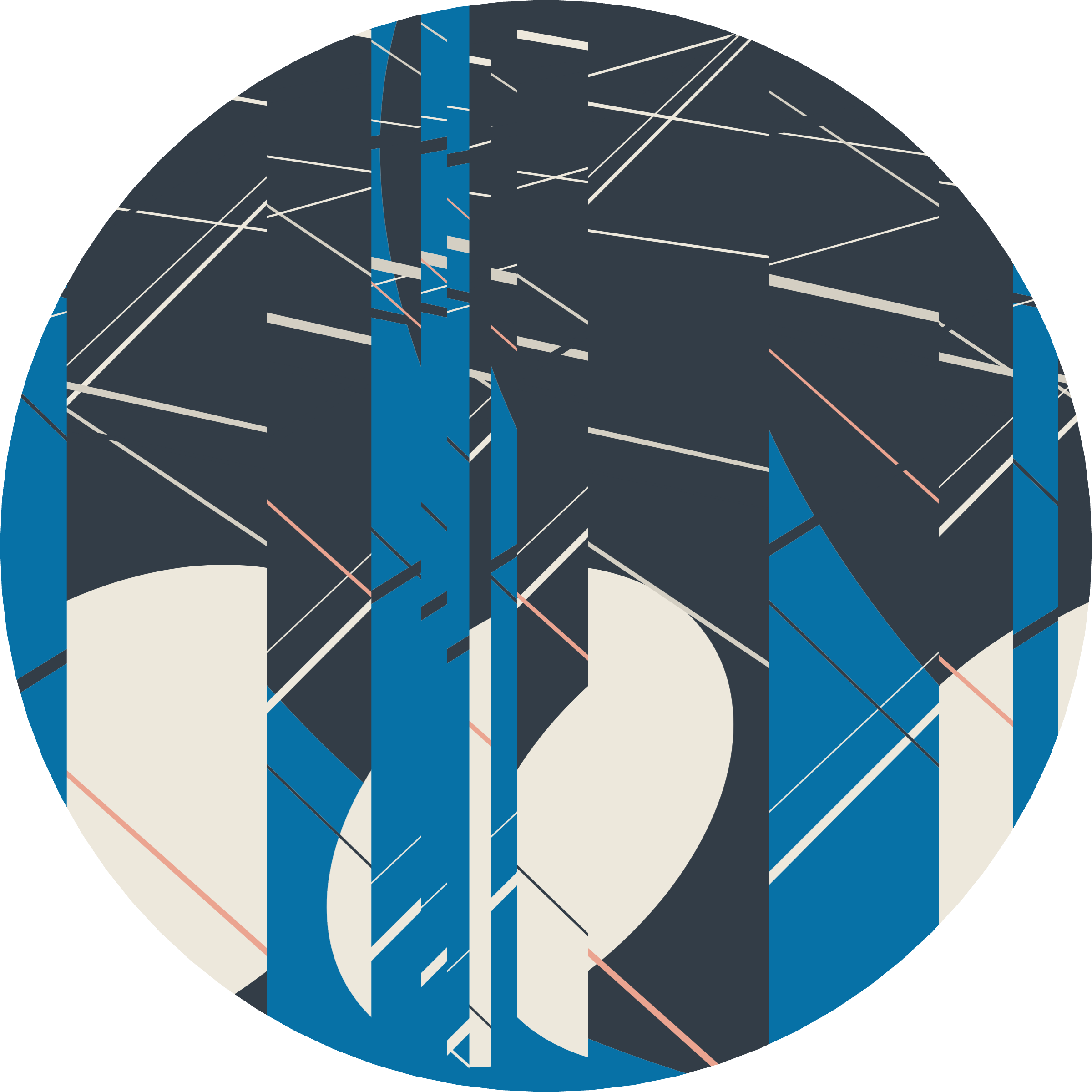 InterpretsCENTURY #31Status Accessioned into the permanent CollectionStatus as ofGift of punk6529; Casey REAS; CENTURY #31; 6529 Network Museum, 6529NM.2026.001.01. Licensed CC BY-NC 4.0.
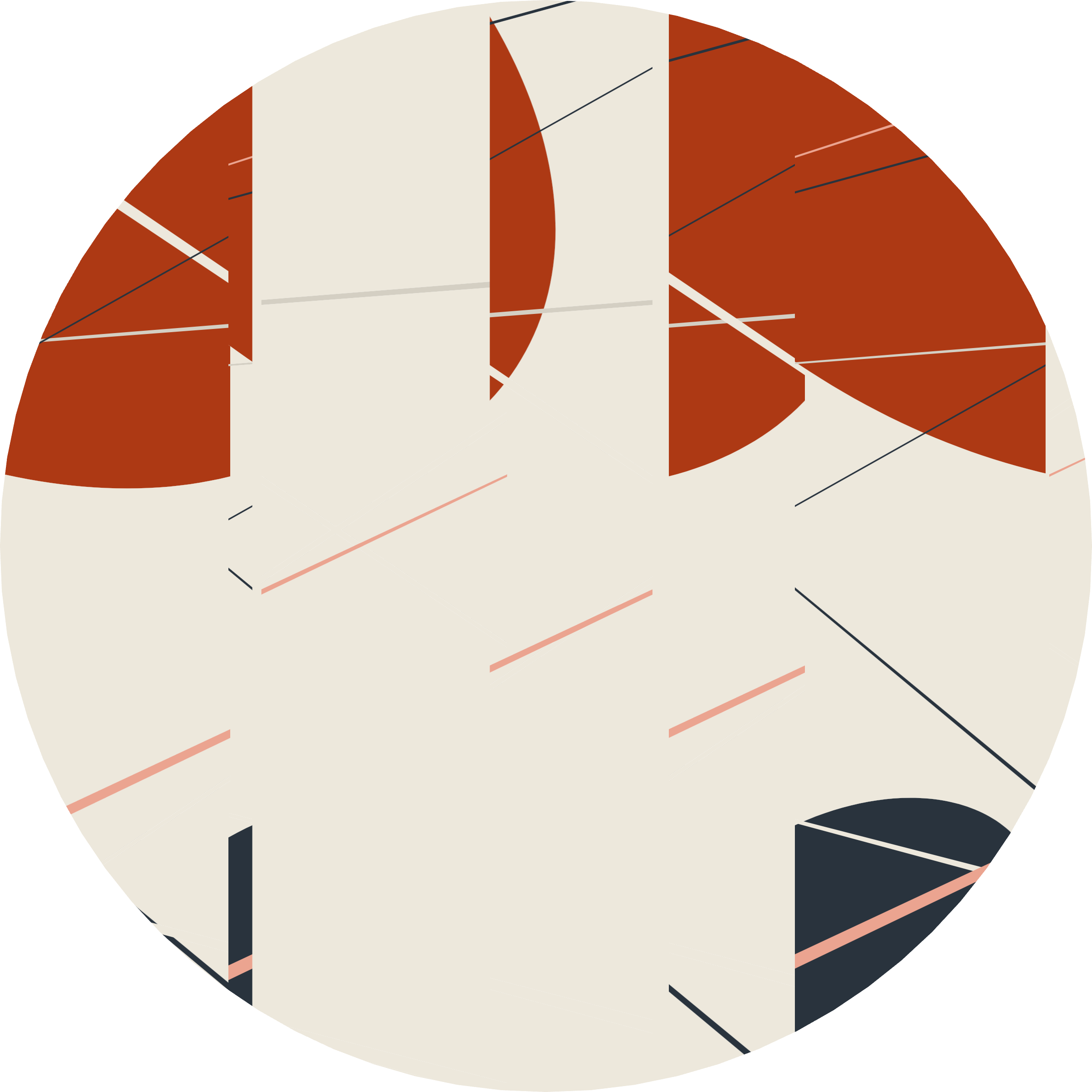 InterpretsCENTURY #724Status Accessioned into the permanent CollectionStatus as ofGift of punk6529; Casey REAS; CENTURY #724; 6529 Network Museum, 6529NM.2026.001.02. Licensed CC BY-NC 4.0.
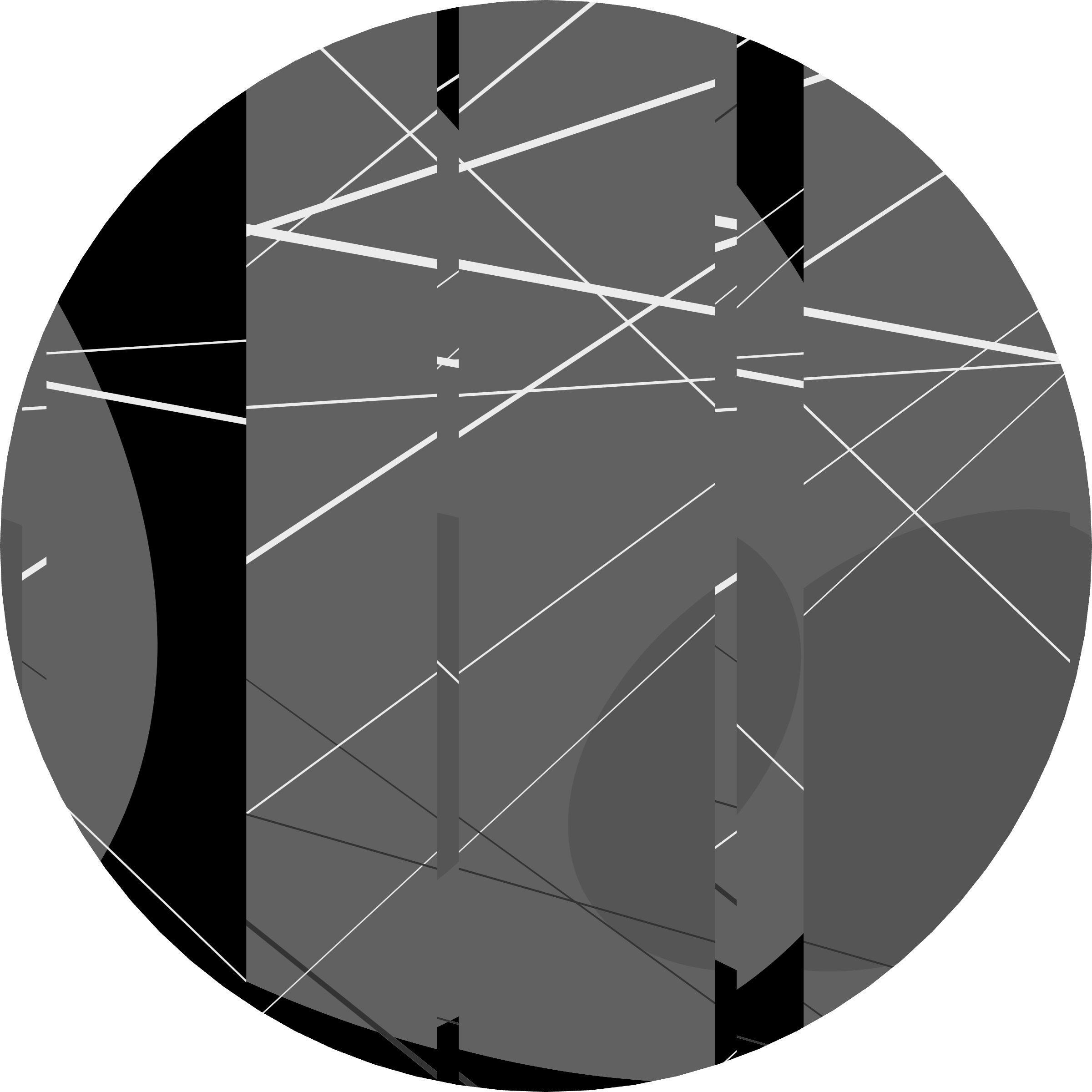 InterpretsCENTURY #401Status Accessioned into the permanent CollectionStatus as ofGift of punk6529; Casey REAS; CENTURY #401; 6529 Network Museum, 6529NM.2026.001.03. Licensed CC BY-NC 4.0.
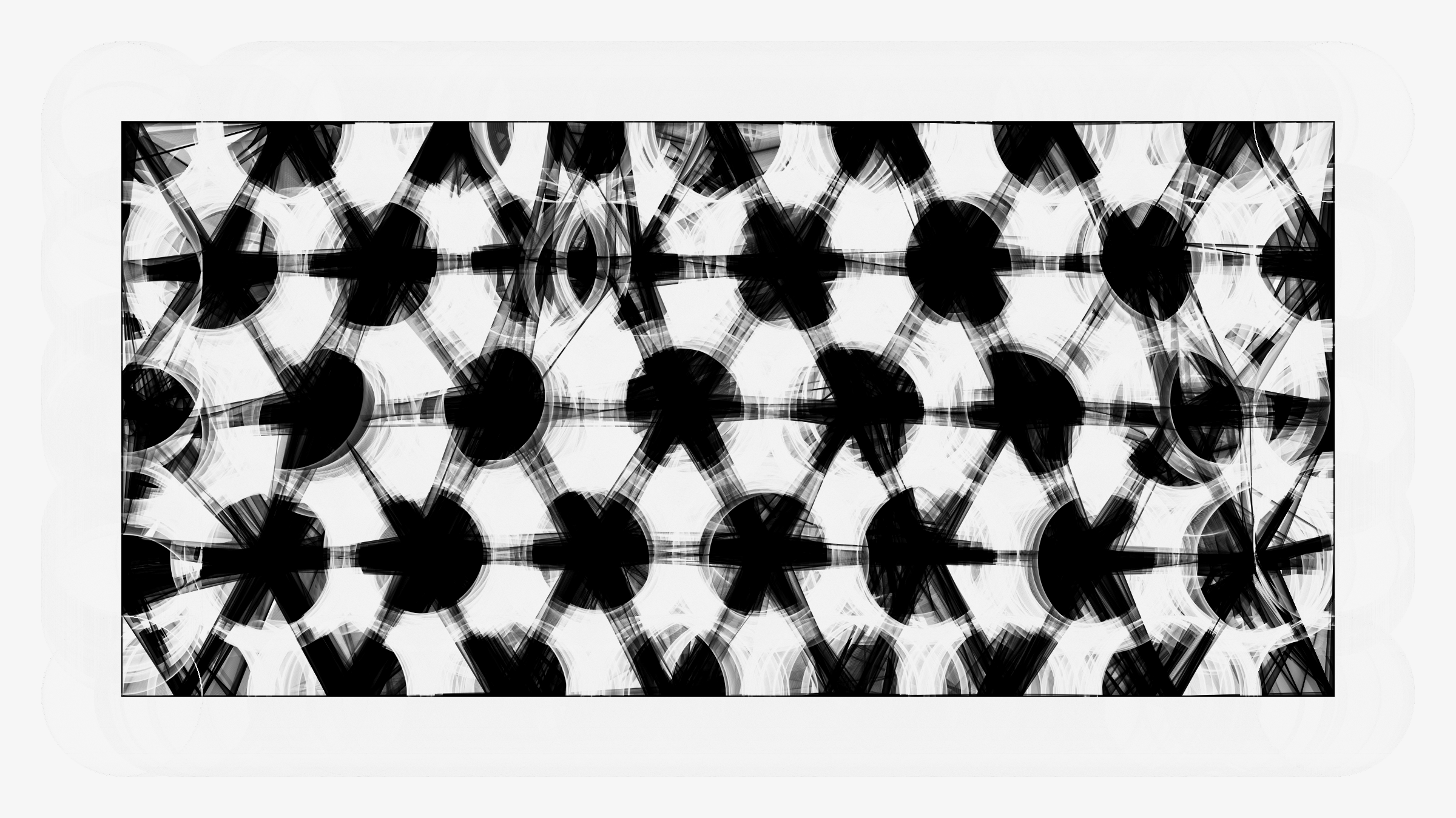 InterpretsPre-Process #63Status Accessioned into the permanent CollectionStatus as ofGift of punk6529; Casey REAS; Pre-Process #63; 6529 Network Museum, 6529NM.2026.001.04. Licensed CC BY-NC 4.0.
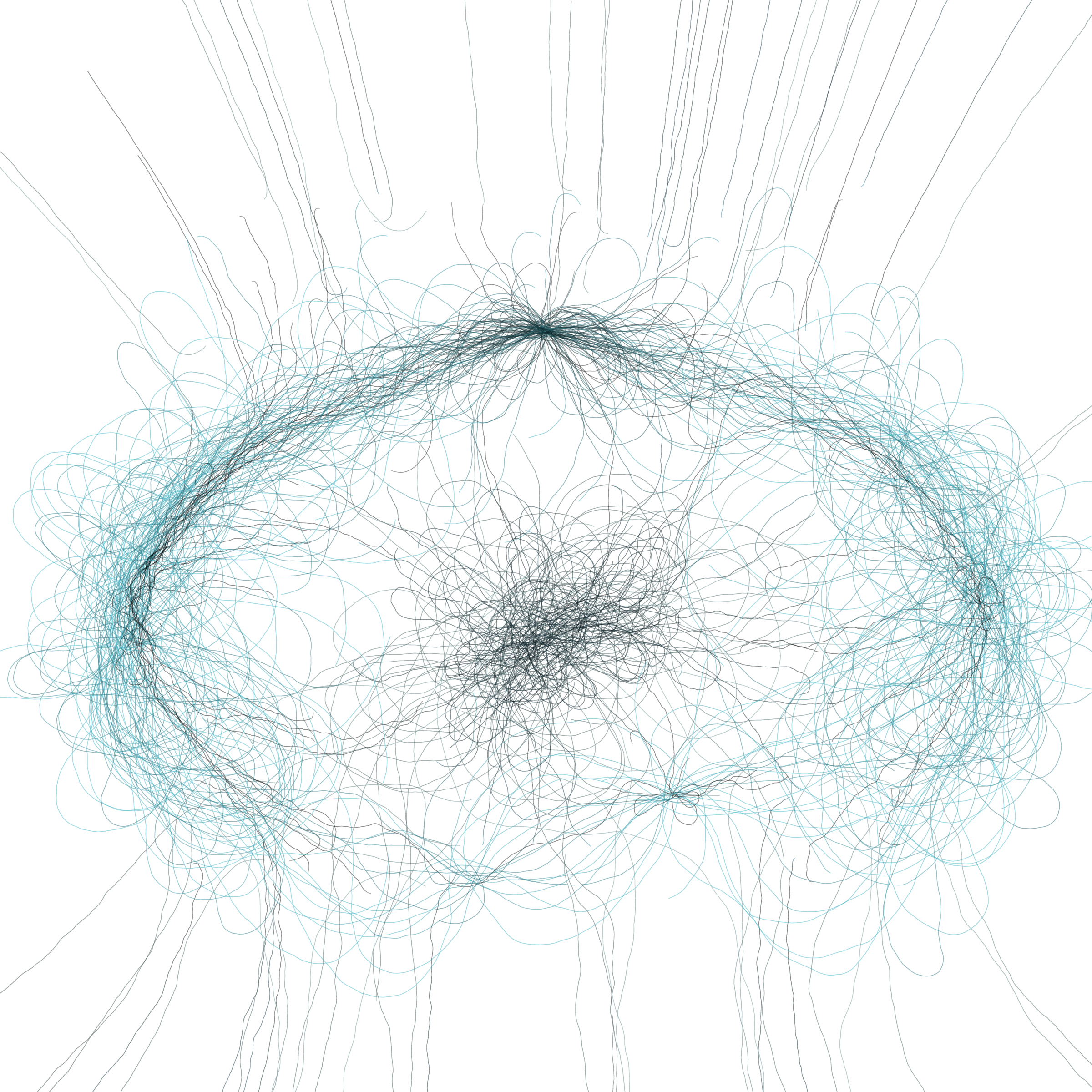 InterpretsPhototaxis #308Status Accessioned into the permanent CollectionStatus as ofGift of punk6529; Casey REAS; Phototaxis #308; 6529 Network Museum, 6529NM.2026.001.05. Licensed CC BY-NC 4.0.
- Interprets923 EMPTY ROOMS #713Status Accessioned into the permanent CollectionStatus as ofGift of punk6529; Casey REAS; 923 EMPTY ROOMS #713; 6529 Network Museum, 6529NM.2026.001.06. Licensed CC BY-NC 4.0.
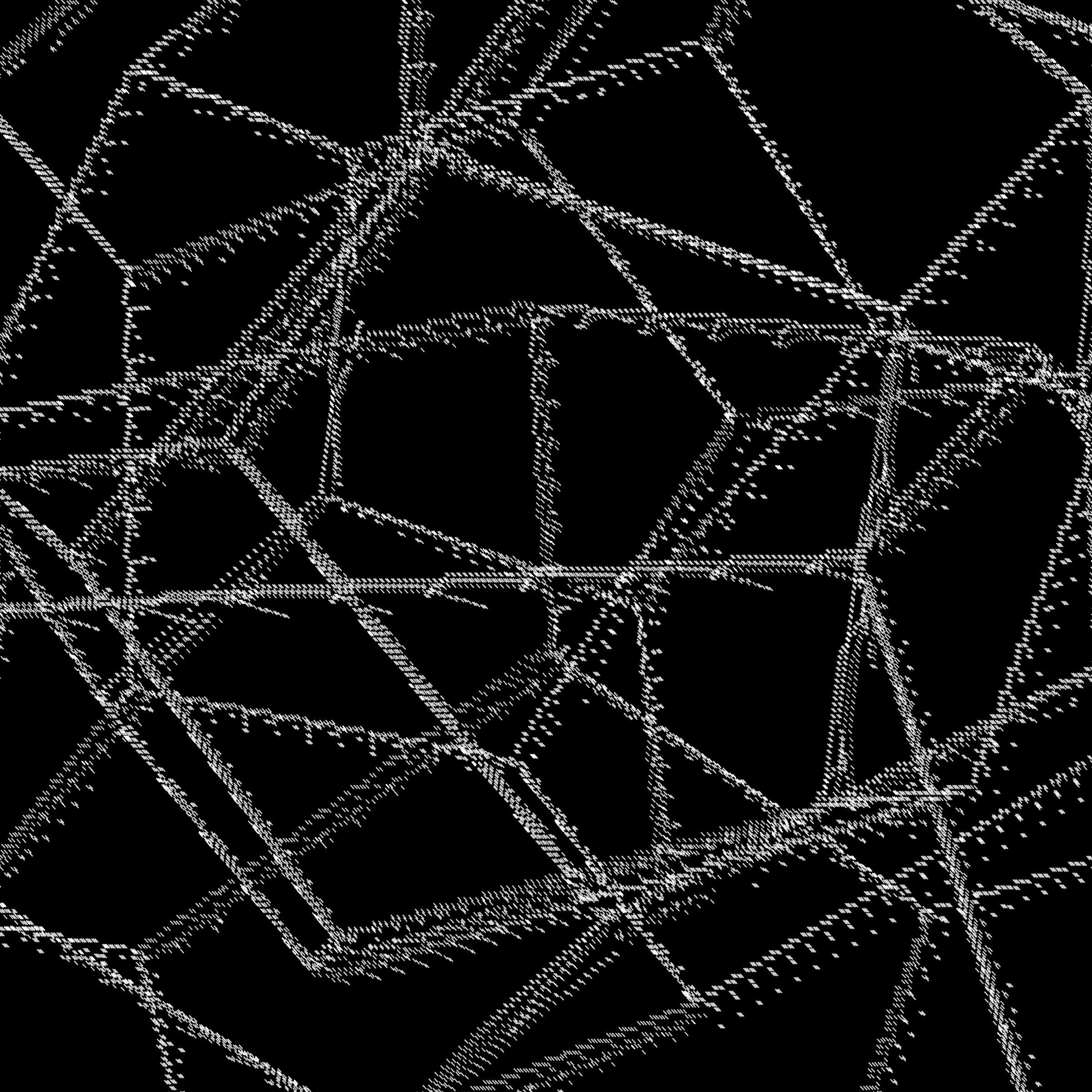 InterpretsEx Nihilo (Cosmos) #248Status Accessioned into the permanent CollectionStatus as ofGift of punk6529; Casey REAS; Ex Nihilo (Cosmos) #248; 6529 Network Museum, 6529NM.2026.001.07. Licensed CC BY-NC 4.0.
Selected reading
This excerpt keeps the section numbers of the complete essay. Omitted sections remain available in the complete research record below.
Casey Reas in the 6529 Network Museum
Three fractured modernist fields, a panoramic record of collision, a pale circulation of artificial lives, an optical room, and geometry emerging from black form the Museum's seven-work study of Casey Reas. Together, the seven works let the Museum compare how Reas turns rules, duration, and changing image states into composition. The tokens are recent; their lineages reach from code begun in 2003 to a project released in 2026.
I. A collection begins with difference
The three CENTURY works establish the terms of the group. CENTURY #31 is dense and pressurized: slate, saturated blue, cream, and pale salmon are compressed inside a circular boundary, then broken by a tight succession of vertical slices. CENTURY #724 opens the same system into broad cream intervals crossed by rust-red arcs and sparse lines. CENTURY #401 turns it grayscale, using black uprights, white diagonals, and translucent curved forms to create an architecture whose planes refuse to settle.
The project grammar gives no reason to treat one picture as primary and the others as variants. They are three decisions made by the same system under different token-specific conditions. Their relation lies in controlled difference.
That proposition extends across the accession. Pre-Process #63 replaces slicing with a population of Elements whose actions build a panoramic field. Phototaxis #308 converts the movement of simulated machines into pale trajectories. 923 EMPTY ROOMS #713 constructs an apparent interior through broken colorforms and optical contradiction. Ex Nihilo (Cosmos) #248 lets segmented white lines gather into unstable solids against black.
Each work offers a different answer to a common question: how does an authored rule become an image the author has not individually placed? Casey Reas does not answer by retreating from composition. He changes its scale. He chooses the entities, actions, limits, probabilities, source material, interfaces, and presentation through which a work can occur. The local event may surprise him; the world in which it happens is constructed.
Donation and accession formed this Museum group. The record contains no artist selection or endorsement, artist-designated triptych, or donor selection thesis. The comparison advanced here is curatorial and does not attribute the Museum's interpretation to Reas or punk6529.
Museums form relations among objects that were not conceived as ensembles. Those relations stand or fall through evidence and looking. Here the comparison has force because Reas's practice moves among systems, implementations, manifestations, and returns. The collection presents seven states through which those systems become available for study.
III. Behavior becomes drawing
If CENTURY begins with a composition and cuts it apart, Pre-Process begins with entities and lets their behavior produce the composition. The system originated in 2003, appeared in unresolved form in the 2005 exhibition Process/Drawing, and was completed as a 120-work Art Blocks project in 2022. Reas has described it as a “Rosetta Stone” for the mature Process works because its simple grammar makes their later logic easier to recognize.
The 120 works realize every significant permutation of eight surfaces, three origins, and five growth configurations: 8 × 3 × 5 =. Every work contains one hundred Elements. These conditions structure the field without predetermining a single visible arrangement. Elements move, collide, avoid, and accumulate; the image records the resulting history.
Pre-Process #63 is wide, with a recorded aspect ratio of 1.78. Its three horizontal registers evoke a score, a filmstrip, or a scientific instrument. Dark circular masses attach to strong axes while translucent arcs sweep around them. Some forms have the blunt certainty of mechanical components; others appear as afterimages left by repeated passage.
The width changes the work's temporality. In a square composition, the eye might search for a center. Here it travels laterally from one zone of activity to another. The repeated horizontal bands offer order, but events exceed their compartments. Arcs cross local boundaries; black masses interrupt flow; pale repetitions suggest that a form has occupied several positions.
The picture records the relations among one hundred agents. Collision appears as darkening or blockage; continued movement appears as an arc; repeated passage produces a ghosted surface. Like a long-exposure photograph, the still gathers duration, while its rules determine the world being recorded.
The return to early code is part of the work. In 2022, Reas revisited an unresolved 2003 system, selected what remained generative, and gave it a finished public structure. Pre-Process turns software history into material.
Phototaxis #308 reaches back even further in conceptual lineage. Reas's early Path, Tissue, and MicroImage works drew on Valentino Braitenberg's Vehicles: Experiments in Synthetic Psychology. Braitenberg imagined simple machines whose sensor-motor connections produce behavior that human observers interpret as attraction, fear, aggression, or curiosity. Reas used related artificial agents as drawing machines: movement through a field became line.
The Phototaxis system migrated from C++ through Processing/Java to p5.js and was released for Art Blocks in 2021, although the artist's current NFT register lists 2022. The discrepancy is preserved in the Museum's research rather than smoothed away. Four machine types respond to token-specific arrangements of lights. The software halts after one thousand initial iterations to produce the official thumbnail state; viewers can allow the system to continue, pause, restart, magnify, and reveal the lights.
In #308, pale cyan and gray trajectories circulate around a dense knot below center. A second convergence gathers above, and several long paths escape into the surrounding field. The composition is airy from a distance, but its central zone is tightly worked. Curves overlap until individual routes become difficult to follow.
The official 1,000-iteration thumbnail state turns time into three formal quantities: density, curvature, and reach. A dense knot indicates sustained activity in a limited area. Tight curves imply repeated turning. Long lines register departure. The image is evidence of behavior without a diagram of cause. Its three light positions organize movement without remaining visible in that platform thumbnail.
Human perception supplies psychology. A path appears hesitant, urgent, trapped, or exploratory because we read intention into movement. Reas's system makes that projection available without confirming it. The machines are simple; the field is affectively charged. Complexity lies partly in the observer.
Placed beside Pre-Process #63, #308 clarifies two uses of trace. In Pre-Process, a black-and-white population produces collision, accumulation, and layered obstruction across a controlled panoramic apparatus. In Phototaxis, colored paths open into circulation and flight. Both images are histories, but they remember different worlds.
IV. The room and the cosmos
The collection's two latest works move from field to space. They do not render coherent architecture. They create the conditions under which an interior or solid can be inferred and lost.
923 EMPTY ROOMS developed in 2023 in relation to Reas's An Empty Room, which followed his engagement with an unrealized Victor Vasarely commission at LACMA. The project joined Art Blocks and Bright Moments in a six-city release. Its 923-room combinatorial sequence occupies invocations 1 through 923; the retained population also includes invocation 0 with the separate code 999999, for 924 release entries in total. The distinction is factual. The Museum does not assign invocation 0 a speculative meaning.
Each room uses a six-part code to organize named colorforms. 923 EMPTY ROOMS #713, associated with Mexico City in the retained project data, carries code 555536: four Pyramids, one Cargo, and one Moon, against gray. These nouns organize the project but do not describe recognizable objects placed in a room.
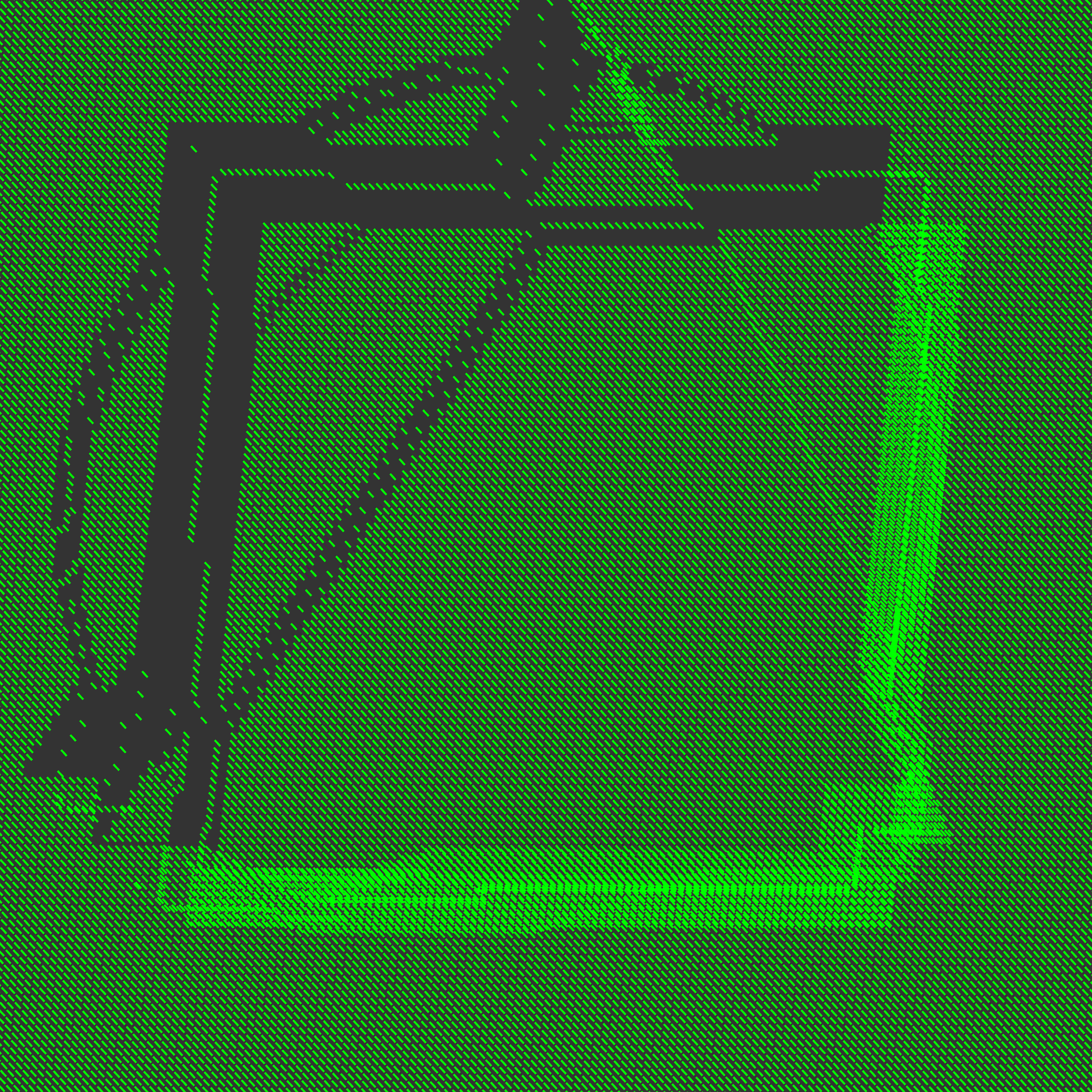
The static image is dominated by an acid-green diagonal raster across charcoal. The raster breaks around dark voids, brightens along a lower ledge, and meets a luminous seam at right. From these interruptions, the eye constructs a corner. Yet no outline guarantees a box. The green may be wall, light, plane, or barrier; the dark may be recess or unmarked surface.
The strongest effect comes from simultaneous recession and vibration. Parallel diagonals imply a surface turning through space, while their high contrast keeps them optically active on the screen. The room appears to deepen and flatten at once. Vasarely's legacy is present not as borrowed motif but as a problem of perception: how can a flat arrangement make spatial certainty unstable?
Code and diagram explain how the state was generated. The work engineers an interval in which the viewer constructs a room from partial visual evidence.
Ex Nihilo (Cosmos) extends the Still Life and Atomism lineages in 2026. Art Blocks and Reas describe its 256 works as continuous, non-repeating displays made through code, line, channel, and changing geometry. The Museum reads the title—“from nothing”—as a tension within a computational work: every state depends on code, libraries, token hash, runtime, hardware, and display. This is a curatorial interpretation, not an assertion of the artist's stated intention. Blackness appears empty because its conditions recede from view.
In #248, segmented white traces cross black. Several alignments suggest polygonal faces and dodecahedral structures, but line breaks prevent a single solid from closing. One scale seems nested inside another; a diagonal can belong to multiple possible planes. The eye completes edges that the image withholds.
The recorded features—RGB false, CHUNK 3, COSMOS 3, and white active—locate #248 within its edition. The decisive visual fact is more austere: interruption has become the means of construction. Where #713 creates a room by breaking a colored raster, #248 creates geometry by separating white segments with black intervals.
The work runs continuously. Pausing produces a state for scrutiny; changing speed alters the pace at which structures can be recognized; channel and regeneration controls change the encounter. The official still is indispensable as documentation and insufficient as a substitute. It converts becoming into one exact arrangement.
Together, #713 and #248 show Reas using absence at two scales. One solicits an interior large enough to enter; the other solicits a geometric body small or cosmic enough to evade measure. The room and cosmos use the same device at different scales: each suggests an ordered space through gaps, interruptions, and incomplete forms.
VII. Into public study
Punk6529 delivered the seven works to networkmuseum. in one transaction on 1 August 2026. The Museum formally accepted the full gift later that day and accessioned the group as 6529NM. on 2 August. The public credit is “Gift of punk6529.” The transfer conveyed the tokens and the donor's full transferable interest; it did not transfer copyright.
Those records establish exact identity, transfer, custody, title, rights, and accession. The group's cultural significance will develop through exhibition, scholarship, preservation, and public encounter.
The accession turns private possession into a durable study group. Viewers should be able to compare the three CENTURY works at meaningful scale, execute live states when technically and legally possible, inspect the difference between still and behavior, read the project's histories, and see what evidence supports each claim. The works should not appear as seven cards whose main content is token number and owner.
Public trust also imposes an obligation to preserve uncertainty honestly. The retained metadata states CC BY-NC 4.0; the Museum can undertake noncommercial exhibition, publication, documentation, adaptation, preservation, migration or emulation, accessibility work, and internal noncommercial computational research subject to the license conditions. Commercial use is not approved. Technical condition passed with conditions, not with a declaration of permanent autonomy. Official generators were tested, but self-contained dependency capture and broader rendering tests remain active work.
The art deserves full presentation: live software with duration, scale, and controls; stills with close looking and accurate surrogate labels. Chain history and conservation detail deepen the encounter when each appears in proportion.
The seven-work group supports argument at several scales. Within CENTURY, three states reveal how difference makes a system visible. Across Pre-Process and Phototaxis, behavior becomes trace. Across 923 and Ex Nihilo, absence becomes space. Across all seven, a recent token can contain an older artistic history without becoming identical to it.
Systems become visible in the images’ seams, paths, voids, and interruptions. Code structures colour and movement; identifiers bind works to their histories; duration reveals behaviour unavailable in a still. The accession keeps these forms of evidence together and open to public interpretation.
Read the complete studyOpen the full essay, notes, bibliography, and publication record.
Casey Reas in the 6529 Network Museum
Three fractured modernist fields, a panoramic record of collision, a pale circulation of artificial lives, an optical room, and geometry emerging from black form the Museum's seven-work study of Casey Reas. Together, the seven works let the Museum compare how Reas turns rules, duration, and changing image states into composition. The tokens are recent; their lineages reach from code begun in 2003 to a project released in 2026.
I. A collection begins with difference
The three CENTURY works establish the terms of the group. CENTURY #31 is dense and pressurized: slate, saturated blue, cream, and pale salmon are compressed inside a circular boundary, then broken by a tight succession of vertical slices. CENTURY #724 opens the same system into broad cream intervals crossed by rust-red arcs and sparse lines. CENTURY #401 turns it grayscale, using black uprights, white diagonals, and translucent curved forms to create an architecture whose planes refuse to settle.
The project grammar gives no reason to treat one picture as primary and the others as variants. They are three decisions made by the same system under different token-specific conditions. Their relation lies in controlled difference.
That proposition extends across the accession. Pre-Process #63 replaces slicing with a population of Elements whose actions build a panoramic field. Phototaxis #308 converts the movement of simulated machines into pale trajectories. 923 EMPTY ROOMS #713 constructs an apparent interior through broken colorforms and optical contradiction. Ex Nihilo (Cosmos) #248 lets segmented white lines gather into unstable solids against black.
Each work offers a different answer to a common question: how does an authored rule become an image the author has not individually placed? Casey Reas does not answer by retreating from composition. He changes its scale. He chooses the entities, actions, limits, probabilities, source material, interfaces, and presentation through which a work can occur. The local event may surprise him; the world in which it happens is constructed.
Donation and accession formed this Museum group. The record contains no artist selection or endorsement, artist-designated triptych, or donor selection thesis. The comparison advanced here is curatorial and does not attribute the Museum's interpretation to Reas or punk6529.1
Museums form relations among objects that were not conceived as ensembles. Those relations stand or fall through evidence and looking. Here the comparison has force because Reas's practice moves among systems, implementations, manifestations, and returns. The collection presents seven states through which those systems become available for study.
II. Three ways to cut a century
The wider CENTURY body began in 2012. The Museum's three works belong to the 1,000-work Art Blocks project released in 2021. Reas developed the body in conversation with twentieth-century abstraction, especially Ellsworth Kelly's acts of selection and recomposition and the motion of kinetic artists including George Rickey. In the software, a composition is divided into vertical strips that are recombined over time. Modernist operations become executable.2
Slicing turns a complete picture into a contest between two possible wholes. One is the composition before the cut, recoverable only in fragments; the other is the temporary arrangement formed by the strips. A curve that appears continuous across one seam breaks at the next. A colored mass can read as one interrupted form or several forms briefly aligned. The eye alternates between repair and acceptance.
In CENTURY #31, sixteen slices and seventeen lines intensify that contest. The circular boundary gives the composition a tondo-like integrity, but the interior is repeatedly spliced. Large cream curves are visible enough to imply an underlying structure and buried enough to prevent its recovery. Blue areas shift between ground and object. Pale diagonals seem to cross the system faster than the vertical cuts, only to be displaced at their seams.
The picture rewards slow attention to small discontinuities. A line that appears forceful at normal size reveals itself as a sequence of near-alignments. Cream fragments gather around the center without becoming a single body. The circle contains this traffic and makes it feel centrifugal: every interruption presses against an edge it cannot cross.
The recorded feature labels—Palette A, line count 17, slice count 16, Oculi true—describe conditions of generation. They are evidence, not interpretation. “Oculi” cannot answer how the circular forms behave, and a larger slice count does not make #31 more complex or more valuable. Complexity is an experienced relation among density, interval, color, and interruption, not a trait total.
CENTURY #724 makes the point visible. It has eleven lines and seven slices; its relative sparseness is not a reduced version of #31. A broad cream field permits rust-red arcs and charcoal diagonals to act across longer intervals. An upper band carries weight without closing the composition; a dark crescent at lower right anchors an area otherwise exposed to drift. Several short vertical elements near the bottom seem detached from a larger structure.
The token's “Janky” label records a project feature; the output's instability has to be located in the image. It lies in the unequal balance between a heavily marked upper region and the open lower field, in diagonals that traverse space without locking it, and in forms that look cut loose rather than carefully centered. The work hangs between arrangement and dispersal. Its openness is active.
CENTURY #401 makes opacity the central event. A gray field contains black vertical columns, white diagonals, and translucent arcs. Ten slices interrupt the composition, while the recorded Alpha feature allows layers to pass through one another. Without strong hue differences, value and overlap carry the image.
The result is spatial but not perspectivally coherent. A black upright can read as a column, a strip placed over the surface, or a cut into it. A white diagonal seems to pass in front before an overlap pushes it behind. Translucent circles resemble diagrams of volumes, but their edges never secure an architectural object. The work proposes shallow depth and withdraws it.
Together, the three pictures reject the average output as a sufficient account of generative art. #31, #724, and #401 disclose a range through contrast. Density becomes legible beside openness; color beside grayscale; numerous slices beside fewer. None stands for the population, but each makes the population more thinkable.
A frequency table can show how often a palette or feature occurs. It cannot determine whether the lower-right crescent in #724 holds its field, whether #31's seams create tension, or whether #401's translucency sustains unstable depth. Those judgments require close looking.
The live generators add duration to this comparison. The official static outputs permit exact scrutiny of one state. Execution allows the slices to move and the composition to renegotiate itself. Stillness makes relation inspectable; movement makes contingency visible. The works inhabit both modes.
III. Behavior becomes drawing
If CENTURY begins with a composition and cuts it apart, Pre-Process begins with entities and lets their behavior produce the composition. The system originated in 2003, appeared in unresolved form in the 2005 exhibition Process/Drawing, and was completed as a 120-work Art Blocks project in 2022. Reas has described it as a “Rosetta Stone” for the mature Process works because its simple grammar makes their later logic easier to recognize.3
The 120 works realize every significant permutation of eight surfaces, three origins, and five growth configurations: 8 × 3 × 5 =. Every work contains one hundred Elements. These conditions structure the field without predetermining a single visible arrangement. Elements move, collide, avoid, and accumulate; the image records the resulting history.
Pre-Process #63 is wide, with a recorded aspect ratio of 1.78. Its three horizontal registers evoke a score, a filmstrip, or a scientific instrument. Dark circular masses attach to strong axes while translucent arcs sweep around them. Some forms have the blunt certainty of mechanical components; others appear as afterimages left by repeated passage.
The width changes the work's temporality. In a square composition, the eye might search for a center. Here it travels laterally from one zone of activity to another. The repeated horizontal bands offer order, but events exceed their compartments. Arcs cross local boundaries; black masses interrupt flow; pale repetitions suggest that a form has occupied several positions.
The picture records the relations among one hundred agents. Collision appears as darkening or blockage; continued movement appears as an arc; repeated passage produces a ghosted surface. Like a long-exposure photograph, the still gathers duration, while its rules determine the world being recorded.
The return to early code is part of the work. In 2022, Reas revisited an unresolved 2003 system, selected what remained generative, and gave it a finished public structure. Pre-Process turns software history into material.
Phototaxis #308 reaches back even further in conceptual lineage. Reas's early Path, Tissue, and MicroImage works drew on Valentino Braitenberg's Vehicles: Experiments in Synthetic Psychology. Braitenberg imagined simple machines whose sensor-motor connections produce behavior that human observers interpret as attraction, fear, aggression, or curiosity. Reas used related artificial agents as drawing machines: movement through a field became line.4
The Phototaxis system migrated from C++ through Processing/Java to p5.js and was released for Art Blocks in 2021, although the artist's current NFT register lists 2022. The discrepancy is preserved in the Museum's research rather than smoothed away. Four machine types respond to token-specific arrangements of lights. The software halts after one thousand initial iterations to produce the official thumbnail state; viewers can allow the system to continue, pause, restart, magnify, and reveal the lights.5
In #308, pale cyan and gray trajectories circulate around a dense knot below center. A second convergence gathers above, and several long paths escape into the surrounding field. The composition is airy from a distance, but its central zone is tightly worked. Curves overlap until individual routes become difficult to follow.
The official 1,000-iteration thumbnail state turns time into three formal quantities: density, curvature, and reach. A dense knot indicates sustained activity in a limited area. Tight curves imply repeated turning. Long lines register departure. The image is evidence of behavior without a diagram of cause. Its three light positions organize movement without remaining visible in that platform thumbnail.
Human perception supplies psychology. A path appears hesitant, urgent, trapped, or exploratory because we read intention into movement. Reas's system makes that projection available without confirming it. The machines are simple; the field is affectively charged. Complexity lies partly in the observer.
Placed beside Pre-Process #63, #308 clarifies two uses of trace. In Pre-Process, a black-and-white population produces collision, accumulation, and layered obstruction across a controlled panoramic apparatus. In Phototaxis, colored paths open into circulation and flight. Both images are histories, but they remember different worlds.
IV. The room and the cosmos
The collection's two latest works move from field to space. They do not render coherent architecture. They create the conditions under which an interior or solid can be inferred and lost.
923 EMPTY ROOMS developed in 2023 in relation to Reas's An Empty Room, which followed his engagement with an unrealized Victor Vasarely commission at LACMA. The project joined Art Blocks and Bright Moments in a six-city release. Its 923-room combinatorial sequence occupies invocations 1 through 923; the retained population also includes invocation 0 with the separate code 999999, for 924 release entries in total. The distinction is factual. The Museum does not assign invocation 0 a speculative meaning.6
Each room uses a six-part code to organize named colorforms. 923 EMPTY ROOMS #713, associated with Mexico City in the retained project data, carries code 555536: four Pyramids, one Cargo, and one Moon, against gray. These nouns organize the project but do not describe recognizable objects placed in a room.
The static image is dominated by an acid-green diagonal raster across charcoal. The raster breaks around dark voids, brightens along a lower ledge, and meets a luminous seam at right. From these interruptions, the eye constructs a corner. Yet no outline guarantees a box. The green may be wall, light, plane, or barrier; the dark may be recess or unmarked surface.
The strongest effect comes from simultaneous recession and vibration. Parallel diagonals imply a surface turning through space, while their high contrast keeps them optically active on the screen. The room appears to deepen and flatten at once. Vasarely's legacy is present not as borrowed motif but as a problem of perception: how can a flat arrangement make spatial certainty unstable?
Code and diagram explain how the state was generated. The work engineers an interval in which the viewer constructs a room from partial visual evidence.
Ex Nihilo (Cosmos) extends the Still Life and Atomism lineages in 2026. Art Blocks and Reas describe its 256 works as continuous, non-repeating displays made through code, line, channel, and changing geometry. The Museum reads the title—“from nothing”—as a tension within a computational work: every state depends on code, libraries, token hash, runtime, hardware, and display. This is a curatorial interpretation, not an assertion of the artist's stated intention. Blackness appears empty because its conditions recede from view.7
In #248, segmented white traces cross black. Several alignments suggest polygonal faces and dodecahedral structures, but line breaks prevent a single solid from closing. One scale seems nested inside another; a diagonal can belong to multiple possible planes. The eye completes edges that the image withholds.
The recorded features—RGB false, CHUNK 3, COSMOS 3, and white active—locate #248 within its edition. The decisive visual fact is more austere: interruption has become the means of construction. Where #713 creates a room by breaking a colored raster, #248 creates geometry by separating white segments with black intervals.
The work runs continuously. Pausing produces a state for scrutiny; changing speed alters the pace at which structures can be recognized; channel and regeneration controls change the encounter. The official still is indispensable as documentation and insufficient as a substitute. It converts becoming into one exact arrangement.
Together, #713 and #248 show Reas using absence at two scales. One solicits an interior large enough to enter; the other solicits a geometric body small or cosmic enough to evade measure. The room and cosmos use the same device at different scales: each suggests an ordered space through gaps, interruptions, and incomplete forms.
V. A history of return
The chronology of the seven works is deceptively recent: 2021, 2022, 2023, and 2026. Their artistic chronology is much longer. Phototaxis revisits the artificial-life drawing of the early 2000s. Pre-Process completes a system begun in 2003. The wider CENTURY body began in 2012. 923 EMPTY ROOMS develops a spatial inquiry around An Empty Room. Ex Nihilo extends Still Life, developed from 2015 and publicly presented in 2016.
The group therefore records a history of return. Reas rewrites, migrates, editions, and reframes earlier systems. Each return asks what can change while a work remains connected to its lineage.
That question was already present in his 2004 Whitney commission {Software} Structures. Reas wrote natural-language instructions, implemented them in software, and invited other programmers to create interpretations. The project distributed identity among concept, text, language, code, execution, and appearance. Later restoration made the historical environment part of the problem.8
The layers have different roles. The contract and token number identify the chain object; the title record establishes the Museum's interest in it. The token hash helps determine its project state. Source code and runtime execute it. A platform supplies generator and metadata routes. A screen manifests it. Documentation records observations about it.
These distinctions are part of the work's condition. A CENTURY still can be read as a composition while remaining a state of moving software. Phototaxis #308 can be identified by its token while depending on a browser environment to continue drawing. Ex Nihilo #248 can have durable chain identity while its experience changes with speed, screen, and execution.
The works make preservation a form of interpretation. Migrating code may preserve behavior while altering timing or rendering. Recording video may preserve duration while removing interaction. A screenshot may preserve an exact state while losing movement. The Museum must retain multiple forms of evidence and state what each one can and cannot do.
Reas's own history offers a model of responsible change, with each migration documented as an artist-led revision. A future museum emulation will be an institutional interpretation. The Museum can describe continuity only by documenting what changes between the earlier and later manifestations.
VI. What seven works cannot say
The collection's limits are part of its argument. It contains no early Path, Tissue, or MicroImage print or software installation. It contains no realization of {Software} Structures and no principal Process text, print, or installation. It lacks the broadcast and source-image works of Signal to Noise and ULTRACONCENTRATED, the public scale of A Mathematical Theory of Communication, the film and machine-learning work of Compressed Cinema and In Silico, and every physical drawing, woodblock, book, sculpture, and mural.
These absences prevent the Museum from presenting the group as a retrospective or complete survey. They also protect Reas from being flattened into an on-chain artist whose earlier career merely anticipated tokens. Processing, teaching, publishing, physical translation, source imagery, cinema, and institution-building are not side notes to the seven works. They are major parts of the practice.
The accession offers a precise collecting proposition: recent on-chain works can carry long artistic lineages without replacing the earlier manifestations through which those lineages developed. The seven provide an entry point while leaving most of the practice outside the group.
Future collecting should follow the omissions that matter most intellectually, not pursue a checklist. An early behavior-based print or software work would clarify how image and execution diverged before current screens. A Process work would make instruction central rather than retrospective. A source-image or Compressed Cinema work would interrupt the misleading path from pure abstraction to long-form generation. A material translation would demonstrate that software, paper, wood, wall, and machine trace are not interchangeable outputs.
Future acquisitions from generative editions should begin with a curatorial question. Open, reproducible distribution analysis can support that inquiry; visual and historical judgment determines which relations matter.
VII. Into public study
Punk6529 delivered the seven works to networkmuseum. in one transaction on 1 August 2026. The Museum formally accepted the full gift later that day and accessioned the group as 6529NM. on 2 August. The public credit is “Gift of punk6529.” The transfer conveyed the tokens and the donor's full transferable interest; it did not transfer copyright.9
Those records establish exact identity, transfer, custody, title, rights, and accession. The group's cultural significance will develop through exhibition, scholarship, preservation, and public encounter.
The accession turns private possession into a durable study group. Viewers should be able to compare the three CENTURY works at meaningful scale, execute live states when technically and legally possible, inspect the difference between still and behavior, read the project's histories, and see what evidence supports each claim. The works should not appear as seven cards whose main content is token number and owner.
Public trust also imposes an obligation to preserve uncertainty honestly. The retained metadata states CC BY-NC 4.0; the Museum can undertake noncommercial exhibition, publication, documentation, adaptation, preservation, migration or emulation, accessibility work, and internal noncommercial computational research subject to the license conditions. Commercial use is not approved. Technical condition passed with conditions, not with a declaration of permanent autonomy. Official generators were tested, but self-contained dependency capture and broader rendering tests remain active work.10
The art deserves full presentation: live software with duration, scale, and controls; stills with close looking and accurate surrogate labels. Chain history and conservation detail deepen the encounter when each appears in proportion.
The seven-work group supports argument at several scales. Within CENTURY, three states reveal how difference makes a system visible. Across Pre-Process and Phototaxis, behavior becomes trace. Across 923 and Ex Nihilo, absence becomes space. Across all seven, a recent token can contain an older artistic history without becoming identical to it.
Systems become visible in the images’ seams, paths, voids, and interruptions. Code structures colour and movement; identifiers bind works to their histories; duration reveals behaviour unavailable in a still. The accession keeps these forms of evidence together and open to public interpretation.
Works in the group
| Museum object | Work | Project date | Chain identity |
|---|---|---|---|
Museum object6529NM. | WorkCENTURY #31 | Project date2021 | Chain identityeip155: |
Museum object6529NM. | WorkCENTURY #724 | Project date2021 | Chain identityeip155: |
Museum object6529NM. | WorkCENTURY #401 | Project date2021 | Chain identityeip155: |
Museum object6529NM. | WorkPre-Process #63 | Project date2022; system begun 2003 | Chain identityeip155: |
Museum object6529NM. | WorkPhototaxis #308 | Project date2021 release; artist register currently lists 2022 | Chain identityeip155: |
Museum object6529NM. | Work923 EMPTY ROOMS #713 | Project date2023 | Chain identityeip155: |
Museum object6529NM. | WorkEx Nihilo (Cosmos) #248 | Project date2026 | Chain identityeip155: |
Notes
Selected bibliography
- Braitenberg, Valentino. Vehicles: Experiments in Synthetic Psychology. Cambridge, MA: MIT Press, 1984.
- Khan, Nora N. “Casey Reas's Disconcerting Software Paintings.” Village Voice, 13 October 2016. https://www.villagevoice.com/casey-reass-disconcerting-software-paintings/.
- Reas, Casey. “Atomism.” https://reas.com/atomism.
- Reas, Casey. “CENTURY.” https://reas.com/century.
- Reas, Casey. “MicroImage.” https://reas.com/microimage.
- Reas, Casey. “Process.” https://reas.com/process.
- Reas, Casey. “Digital art is a kind of performance.” Interview, LACMA Unframed, 13 November 2024. https://unframed.lacma.org/node/3771.
- 6529 Network Museum. Accession statement, gift acceptance authorization, accession certificate, title and rights review, and visual-observation record for
6529NM..2026. 001
Publication metadata and revision history
- Publication date: 2 August 2026.
- Version 1.5.2 — 16 August 2026: Replaced an abstract closing contrast with a direct account of system, evidence, and duration; no factual, evidentiary, rights, provenance, or collection-status assertion changed.
- Version 1.5.1 — 15 August 2026: Copy-edited the public Research edition for direct museum language; no factual, evidentiary, rights, provenance, or collection-status assertion changed.
- Version 1.5.0 — 4 August 2026: Removed an internal production label from the published opening; the interpretation and evidence are unchanged.
- Version 1.4.0 — 4 August 2026: Completed the publication copy desk, clarified title and chain-history boundaries, and attributed the project's non-repetition claim.
- Version 1.3.0 — 4 August 2026: Deep copy-edited the public essay for curatorial cadence and directness; no factual, evidentiary, rights, provenance, or collection-status assertion changed.
- Version 1.2.0 — 3 August 2026: Copy-edited the published essay for directness, cadence, and institutional voice; no factual, evidentiary, rights, provenance, or collection-status assertion changed.
- Version 1.1.0 — 2 August 2026: completed the
8 × 3 × 5Pre-Process combinatorics; replaced unsupported canonical-state language with “official 1,000-iteration thumbnail state”; explicitly identified the Ex Nihilo title argument as a Museum reading; and replaced generic evidence references with direct URLs and exact repository links. - Version 1.0.0 — 2 August 2026: completed publication manuscript superseding the prior visitor-facing collection essay within the stated scope.
Research cutoff: 2 August 2026. This essay interprets the seven-work accession but does not amend the canonical accession records.
Footnotes
-
6529 Network Museum, accession
6529NM., especially the accession statement, accession certificate, and file-by-file object links in source and chronology matrix §2. No artist-selection or artist-endorsement evidence is present in the accession package. ↩2026. 001 -
Casey Reas, “CENTURY,” https://reas.com/century; Art Blocks, “In Conversation with Casey Reas on CENTURY,” https://www.artblocks.io/articles/in-conversation-with-casey-reas-on-century. ↩
-
Casey Reas, “Process,” https://reas.com/process; Art Blocks, “In Conversation with Casey Reas on Pre-Process,” https://www.artblocks.io/articles/in-conversation-with-casey-reas-on-pre-process. ↩
-
Casey Reas, “MicroImage,” https://reas.com/microimage; Valentino Braitenberg, Vehicles: Experiments in Synthetic Psychology (Cambridge, MA: MIT Press, 1984). ↩
-
Casey Reas, “Notes on Phototaxis,” 2021, https://medium.com/@REAS/notes-on-phototaxis-db7aa7641ad8; Casey Reas, “NFTs,” https://reas.com/nfts. ↩
-
Bright Moments, “923 EMPTY ROOMS,” https://www.brightmoments.io/923emptyrooms; Casey Reas, “Atomism,” https://reas.com/atomism; 6529 Network Museum, 923 project descriptor, retained snapshot, and object 06 record. ↩
-
Art Blocks, “Ex Nihilo (Cosmos) by Casey Reas,” 2026, https://www.artblocks.io/collection/ex-nihilo-cosmos-by-casey-reas/purchase; Casey Reas, “Atomism.” ↩
-
Casey Reas, {Software} Structures, Whitney Artport, 2004, https://artport.whitney.org/commissions/software-structures/text.html; Whitney Museum of American Art, Programmed: Rules, Codes, and Choreographies in Art, 1965–2018. ↩
-
6529 Network Museum, raw delivery receipt, receipt acquisition record, gift acceptance authorization, accession certificate, and title and rights review. ↩
-
6529 Network Museum, accession certificate, visual-observation record, and file-by-file links to all seven rights and all seven technical-condition records in source and chronology matrix §2. ↩
Research context
Research context
- InterpretsCENTURY
- InterpretsPre-Process
- InterpretsPhototaxis
- Interprets923 EMPTY ROOMS
- InterpretsEx Nihilo (Cosmos)