

Project study
CENTURY: The Cut That Keeps Happening
6529 Network Museum — project essay Version: 2.4.0 Publication status: Revised publication copy Publication date: 2026-08-02 Institutional authorship: 6529 Network Museum Research cutoff: 2026-08-02 Museum works...
Works in this study
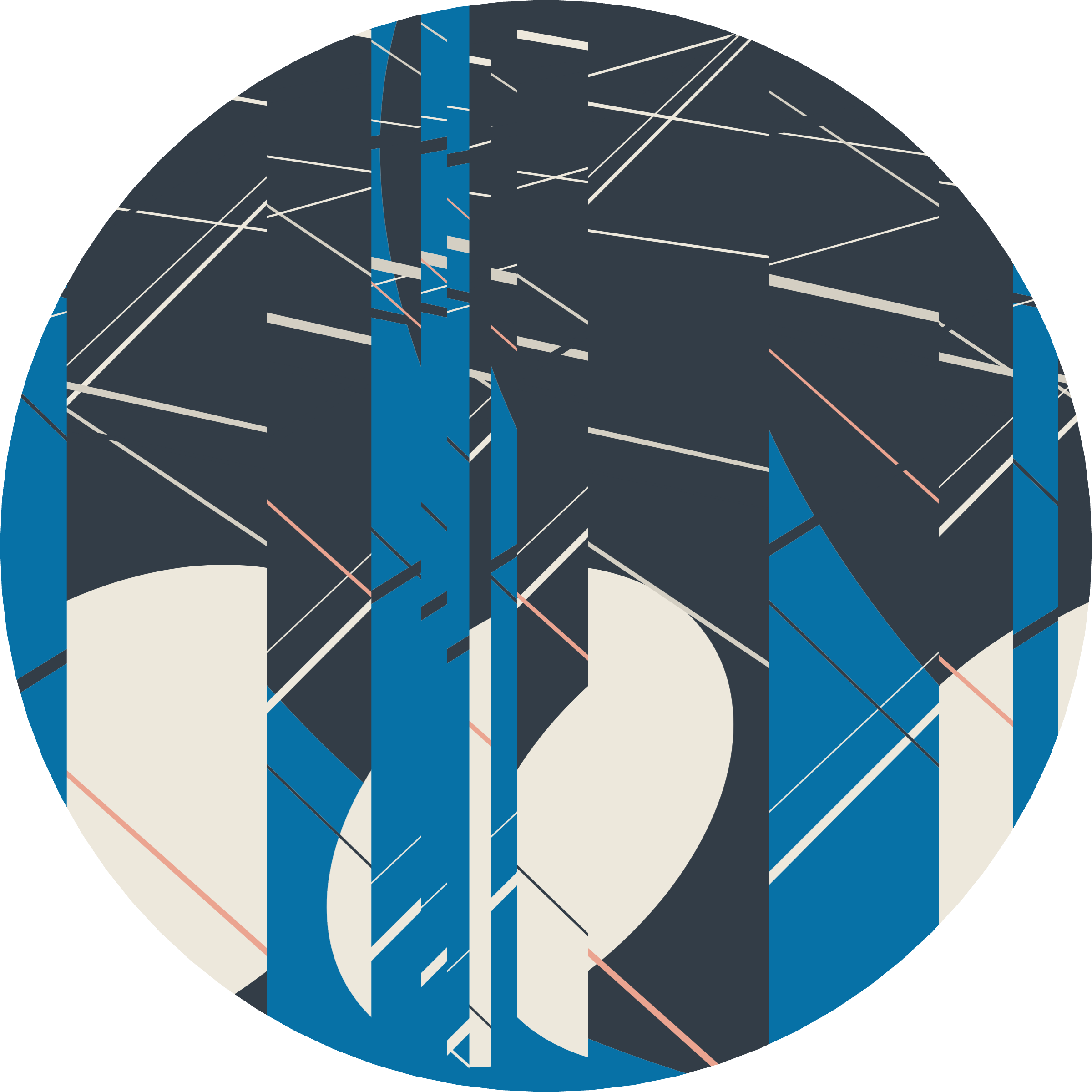
- Related workCENTURY #31Status Accessioned into the permanent CollectionStatus as ofGift of punk6529; Casey REAS; CENTURY #31; 6529 Network Museum, 6529NM.2026.001.01. Licensed CC BY-NC 4.0.
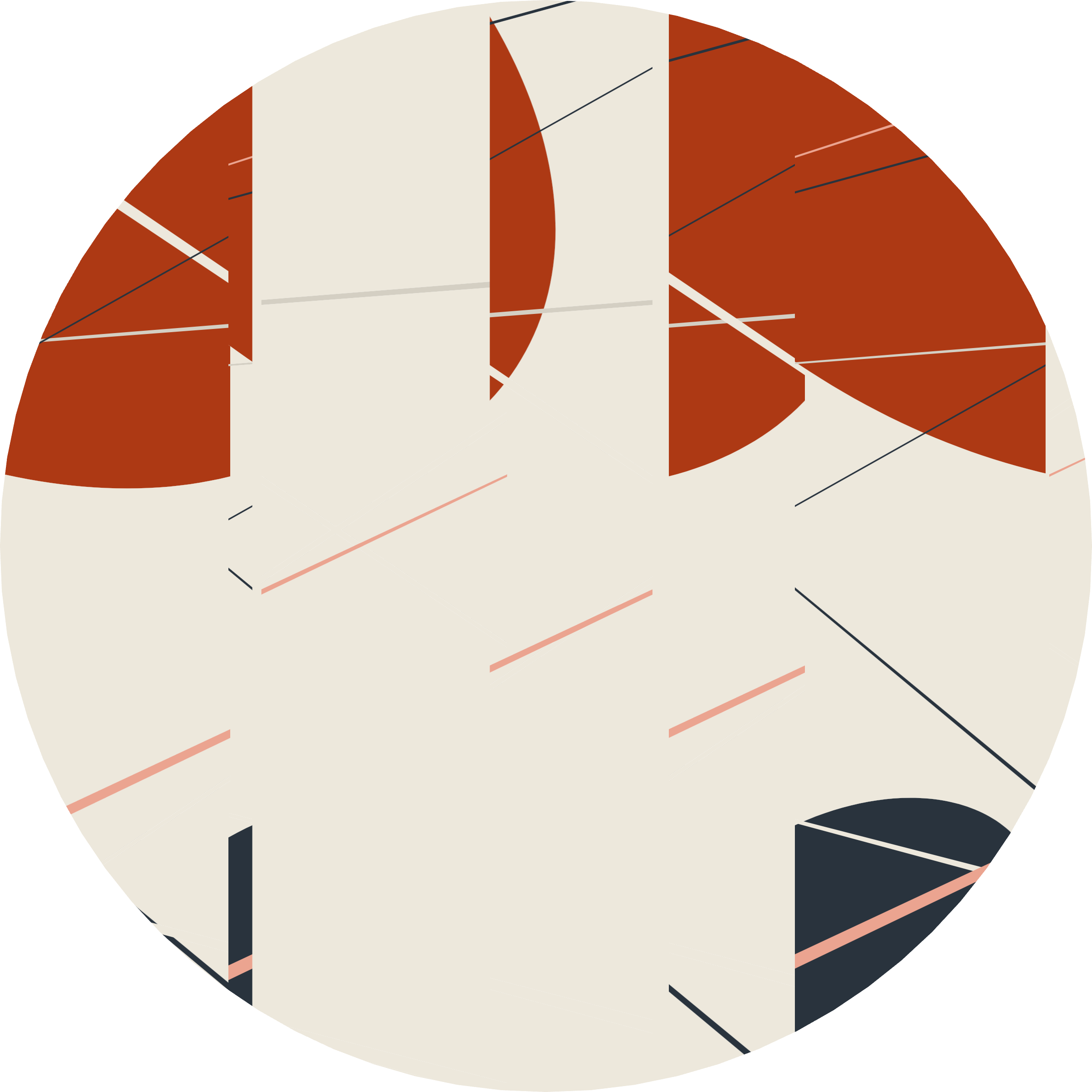 Related workCENTURY #724Status Accessioned into the permanent CollectionStatus as ofGift of punk6529; Casey REAS; CENTURY #724; 6529 Network Museum, 6529NM.2026.001.02. Licensed CC BY-NC 4.0.
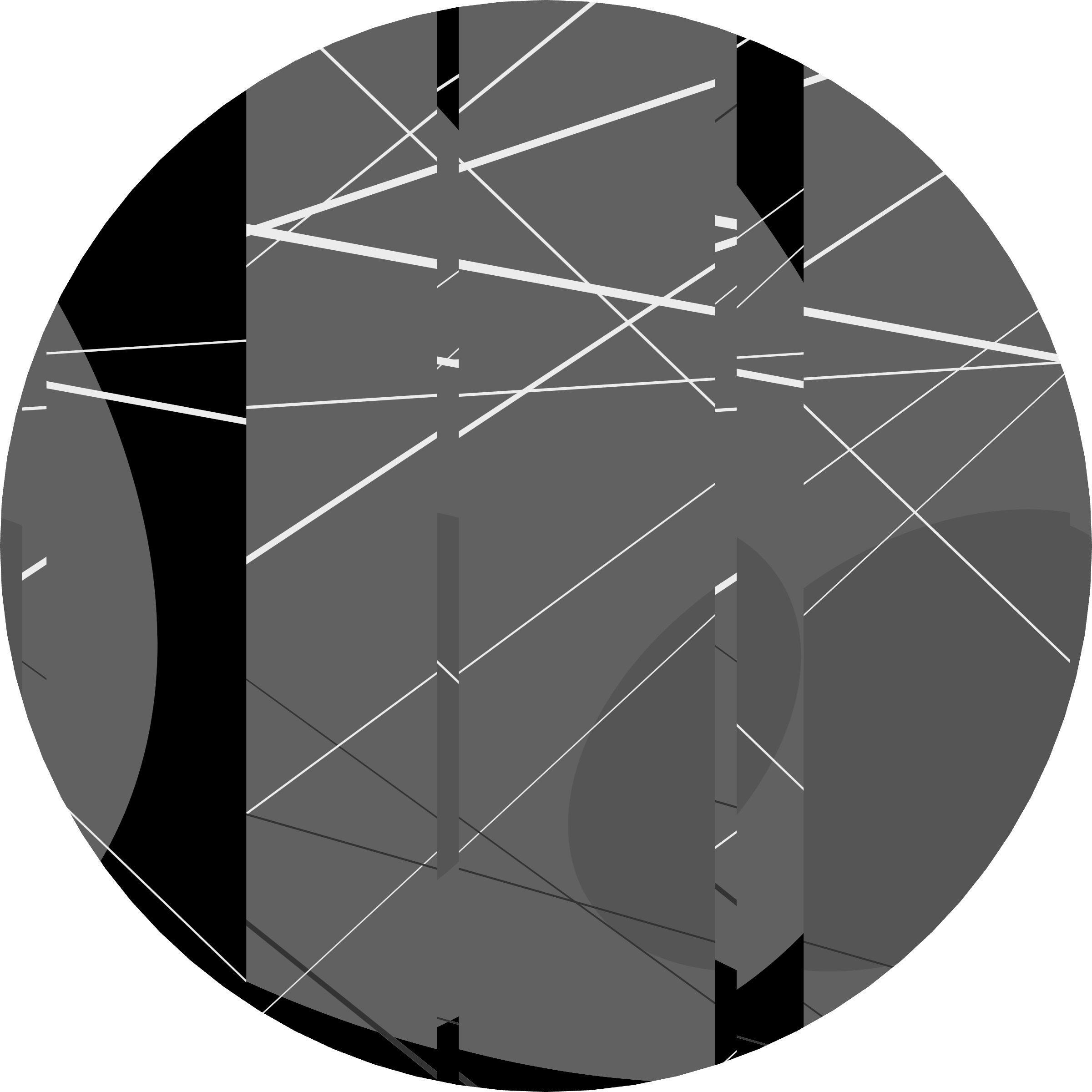 Related workCENTURY #401Status Accessioned into the permanent CollectionStatus as ofGift of punk6529; Casey REAS; CENTURY #401; 6529 Network Museum, 6529NM.2026.001.03. Licensed CC BY-NC 4.0.
Read the complete studyOpen the full essay, notes, bibliography, and publication record.
6529 Network Museum — project essay Version: 2.4.0 Publication status: Revised publication copy Publication date: 2026-08-02 Institutional authorship: 6529 Network Museum Research cutoff: 2026-08-02 Museum works discussed: CENTURY #31, #724, and #401 (Casey REAS, 2021), accessioned as 6529NM.2026.001.01–.03
In CENTURY, Casey Reas takes one decisive operation of twentieth-century abstraction—the cut—and submits it to an image that can keep changing. The three works in the 6529 Network Museum turn that operation into a small, exact comparative field. #31 makes cutting feel like pressure within a dense circular mass; #724 makes it a device for holding open a nearly vacant ground; #401 makes it a tonal interruption that unsettles shallow, architectural depth. Together they distribute a compositional problem across time, code, and distinct states of attention.
The cut is not finished
Reas has said that the 2021 Art Blocks project grew from an encounter with Ellsworth Kelly’s 1950s cut-and-reassembled images: a composed image is divided into columns, the columns are reordered, and an apparently whole field discovers that it was never indivisible.1 Kelly’s cut suspends the authority of a resolved composition by making its internal divisions newly visible. Reas’s software makes that suspension executable. A token hash establishes a distinct base image; the program animates it; and the viewer can cut and reorder slices again through the live interface. Cutting remains available within the image.
The relation between precedent and contemporary work turns on this doubled division. CENTURY makes a cut both a formal event and an instruction for continued behavior. A vertical seam may initially read as a constructive boundary, then as a hinge, an obstruction, or a record of a viewer’s intervention. The system keeps the parts sufficiently coherent for their displacement to matter. Its cuts expose the image’s dependence on relations that can be rearranged.
CENTURY belongs to a longer Reas practice without collapsing into a career summary. From the early 2000s onward, Reas has made works in which instructions, code, and perceptible visual consequences sit in uneasy proximity. In the {Software} Structures and Process works, a natural-language score and a running program offered different ways of encountering the same system. The score made a rule legible before a screen could make it visible; the screen made the rule temporal, contingent, and visually dense.2 CENTURY transfers that problem to a different historical vocabulary: modernist abstraction’s economy of color, line, interval, and partition. The earlier conviction remains: an image is most alive when a viewer can sense the gap between the rule and the event it produces.
Meredith Hoy locates Reas's practice in the friction between coded process and visual surface.3 CENTURY intensifies that friction. Color establishes pressure, weight, and temperature; line turns computational operations into interruption and reattachment. The viewer encounters a composition while remaining aware of the field of possible states around it.
A twentieth-century title for a twenty-first-century procedure
The title CENTURY names a broad body of work that Reas dates from 2012, while the three Museum tokens belong specifically to the 1,000-work Art Blocks project released on 25 June 2021.4 The two dates name different moments: the earlier body’s beginning and this edition’s release. The larger body has moved through exhibitions, prints, software, and related projects; Reas places its question in the interval between twentieth-century abstraction and the conditions of computational image-making.5 The 2021 project takes one branch of that inquiry and makes its variation public at edition scale.
Reas’s own description is specific about the ingredients. He names the number and thickness of lines, slice count, palette, subtle motion, and chance as variables; he calls the transaction hash the source of each work’s unique base image; and he directs the viewer to run the work live, rather than treating its static image as sufficient.6 The relation to George Rickey is useful at precisely this level. Rickey’s kinetic sculpture makes movement a matter of physical balance, air, metal, and duration. CENTURY does not imitate that objecthood. Its movement takes place in a screen field whose parts can be recomposed in a way a physical sculpture cannot be. The comparison isolates an operation—slight, ongoing change—not a common style.
The project’s broader modernist coordinates need the same care. Reas places CENTURY in conversation with twentieth-century painting and drawing, while his 2021 account isolates Kelly’s slicing and recomposition as the project’s immediate operation.7 Kelly’s cutting makes a composition’s prior unity precarious. In CENTURY, that operation becomes an adjustable relation inside a browser program. The shift carries a repertoire made for drawings and paintings into an environment where a field can be animated, distributed across an edition, and revised by a key press.
That migration carries a risk. The modernist reference can become a credential, treating the history of abstraction as a reservoir of authoritative forms waiting to be sampled by software. CENTURY keeps that history unsettled. Its seams are often too emphatic to be absorbed into an elegant whole; its movement denies the viewer a final composition; and its generated states make seriality an experience of difference rather than an orderly sequence. The project inherits modernism’s concern with clarity but repeatedly lets clarity buckle under an image’s own behavior.
The Museum brings this problem into focus through three exact token states. The group is a Museum-formed comparison rather than an artist-designated triptych or a survey of all 1,000 works. Its force lies in the sharpness of the contrast: density, openness, and tonal opacity are particular ways this system can make an image hold—or withdraw—attention.
Three states, three kinds of pressure
#31: a field under compression
At first encounter, CENTURY #31 is pulled toward a dark, nearly circular center. Slate and saturated blue gather into a heavy field, while cream semicircles appear at and beyond its perimeter as if larger forms had been cropped by an unstable frame. Pale-salmon and cream diagonals cross the field, but the eye returns to the dark mass because it offers the greatest concentration of weight. The composition does not settle into a centered emblem. Its conspicuous vertical splices run through the disk, cutting the round form into segments that do not quite agree about their own contour.8
Those splices do more than identify the project’s procedure. They alter the visual status of the circle. A circle ordinarily promises containment: one edge describes one body. Here the edge is repeatedly interrupted, so that the disk reads as a provisional assembly. Its cream arcs seem partly buried by the dark field and partly exposed by the cuts, making the image alternate between enclosure and leakage. The diagonals add a different tempo: they pull across the vertical logic of the slices and prevent the field from becoming merely stratified.
The result is a tension between a forceful center and the evidence that the center has been constructed from movable parts. In a live presentation, the work’s motion and available slice/recompose controls extend that tension beyond the captured still; the Museum’s observation establishes that two later viewport states differed, but it does not license a description of the precise sequence of change.9 The still already prepares the viewer to expect instability. It is an image of coherence with its joints exposed.
#724: interval as the subject
CENTURY #724 reverses #31’s compositional pressure. A broad cream ground takes up most of the field. Rust-red arcs and bands hover near the upper region, while sparse charcoal and salmon diagonals gather below and toward the sides. The effect is suspension. Each element has room to declare a direction, and the negative space becomes an active interval through which the eye measures their separation.10
The vertical partitions remain decisive, but their work has changed. In #31 they cut through a dense mass, making the center feel fractured. In #724 they organize a field that was never dominated by one mass in the first place. A dark segment in the lower area does not arrive as a wound in a whole; it functions more like a counterweight, preventing the pale ground from becoming merely atmospheric. The rust arcs hang in the upper field with a delicacy that is repeatedly checked by straight edges and spare diagonals. The composition is poised, but its poise is not classical balance. It is a balance that acknowledges the possibility of being rearranged.
Beside #31, #724 makes variation perceptual. A generative system is often described through the number of possible outputs, as though variation were an abstract quantity. #31 asks the eye to move through a packed field whose seams interrupt centrifugal form. #724 asks it to linger in open space and register how little is required for a slice to become an event. The Museum’s retained project metadata records distinct palette and slice parameters for the two tokens, while the image’s openness resides in the distribution of arcs, diagonals, divisions, and cream ground that holds the viewer at a distance from any settled center.
#401: the image becomes shallow space
If #31 is centripetal and #724 suspended, CENTURY #401 produces an architectural effect. The observed state is grayscale: gray planes, black vertical columns, white diagonals, and translucent circular or arc-like forms appear to cut through one another. Black bands establish abrupt frontality, while white lines make oblique incursions across the planes. The effect is a shallow depth that never stabilizes into a room, a landscape, or a geometric solid.11
Removing hue from this observed state concentrates attention on value and edge. The black columns read as both obstructions and supports; they interrupt the gray field but also hold its fragments in relation. The white diagonals are finer and faster. They traverse rather than anchor, producing a visual tempo that makes the large planes seem temporarily placed. Translucent arcs complicate the scene further: they may be read as circular remnants, overlays, or traces of a form moving behind the columns. Each reading is plausible for a moment and then undercut by the next crossing.
Object #401 makes slicing feel less like a physical cut than a test of planar depth. The work's project metadata includes an alpha setting, while translucency keeps the gray planes from claiming full opacity. The picture becomes a stack of partial surfaces whose order is uncertain. Where #724 uses open cream space to keep compositional relations legible, #401 makes relation itself difficult to locate. Its visual result remains deliberately hard to parse.
The three-work comparison earns its place through a question more exact than palette: when a generative image is cut and recomposed, where can coherence reside? #31 locates it in a pressured central mass; #724 locates it in intervals among sparse elements; #401 distributes it across unstable planes. The answer changes with each token, but the underlying question remains visible.
The screen is a condition, not a neutral window
CENTURY includes a custom browser program, p5.js runtime, hash-derived token state, screen, moving image, and viewer controls; the ERC-721 token supplies the identity and edition layer of that event.12 A saved image shows one state, while the live work adds duration and the possibility of recomposition.
The three works make a clear exhibition argument. They should be given enough viewing space to permit comparison without forcing synchrony. Identical monitor dimensions and aligned horizons would make their different visual pressures legible, while a rigidly synchronized loop would falsify the project’s interest in independent, continuing behavior. A darkened room has its own costs: it would intensify #31’s central mass and #401’s value shifts while making #724’s cream field less like an interval held in ambient space. An installation should therefore treat brightness, viewing distance, and the relation between the three screens as interpretive decisions, documented as such rather than mistaken for neutral delivery.
The keyboard control makes the viewer a participant in recomposition. A public presentation can distinguish unattended live duration from a marked interactive session, while both remain within the programmed limits.
The display question also resists a familiar digital-art shorthand: if code is knowable, the work must be transparent. Reas has repeatedly made systems that offer an intelligible premise but not an immediately decipherable visual result. The Whitney’s presentation of {Software} Structure #003 B is instructive: it describes a changing, cumulative image as something like a long-exposure record, an image in which duration is compressed rather than made simple.13 CENTURY is less diagrammatic and more chromatically assertive, but it shares the insight that a rule can be stated clearly while its visual consequences remain excessive, slow, or unresolved.
Against frictionless abstraction
The reception question most relevant to CENTURY concerns what viewers are asked to do with computational images. Hoy’s 2011 paper refuses the assumption that Reas must choose between conceptual rigor and pictorial pleasure. That argument remains useful because CENTURY is visibly designed: its color and line are the arena in which its algorithm is encountered. Yet an account that celebrates immersion too easily misses the cost of continual change.
Nora N. Khan’s review of Reas’s 2016 Still Life exhibition supplies a necessary counter-pressure. Writing about a different body of work, she describes an experience in which a viewer repeatedly loses a grasped pattern as the field changes; she treats strain, agitation, and illegibility as consequences rather than defects to be smoothed away.14 CENTURY is quieter and more economical than the projected Still Life works Khan saw. Its cuts and subtle movements need not deliver a pleasurable lesson in systems thinking. In #31, the field’s seams can feel like a continual refusal of rest; in #401, the lack of settled depth can make the image resistant rather than welcoming. That resistance keeps abstraction from becoming a frictionless style for information culture.
The project is also vulnerable to a historical shortcut: treating the twentieth century as a usable set of visual motifs. Attention to the transformation of operations prevents that reduction. Kelly’s cutting becomes a programmed condition under which an image can be recomposed without exhausting its identity. Rickey’s kinetic reference helps name a temporal relation that software distributes differently. The Museum’s three works are occasions on which a historical procedure becomes a question about a live image’s persistence.
Why these three works matter here
The Museum’s CENTURY holdings make a compact proposition about Reas’s art: a system can make a compositional vocabulary increasingly specific. #31, #724, and #401 make the edition’s problem visible through difference. In one, the cut shows up as internal pressure; in another, as open interval; in the third, as a disruption of value and shallow space. Their comparison trains the eye to see algorithmic variation as a difference in how an artwork organizes attention.
That proposition changes the seven-work accession as a whole. CENTURY is the group’s most explicit meditation on modernist abstraction and remains part of its larger conversation. The works prepare a visitor to see Pre-Process #63 as another answer to how a rule becomes visible. CENTURY begins from an image that can be sliced and recomposed; Pre-Process begins from elements whose behavior writes the image through their encounters. Seen together, they make Reas’s recurring concern a sustained investigation of the moment an image discovers that it is still in the process of being made.
Notes
Selected bibliography
Primary and official sources
- Art Blocks. “CENTURY by Casey REAS.” https://www.artblocks.io/collection/century-by-casey-reas.
- Reas, Casey. “In Conversation with Casey REAS on CENTURY.” Interview by Jeff Davis. Art Blocks, 21 June 2021. https://www.artblocks.io/articles/in-conversation-with-casey-reas-on-century.
- Ferree, Joel. “Introducing METAVASARELY and An Empty Room, a Two-Part Digital Work by Casey Reas.” LACMA Unframed, 13 February 2023. https://unframed.lacma.org/2023/02/13/introducing-metavasarely-and-empty-room-two-part-digital-work-casey-reas.
- Whitney Museum of American Art. “Programmed: Rules, Codes, and Choreographies in Art, 1965–2018.” https://whitney.org/exhibitions/programmed.
- 6529 Network Museum. Object records 6529NM.2026.001.01–.03; visual observation record; Casey Reas art-historical and technical dossier.
Scholarship and criticism
- Hoy, Meredith. “Painting as Programming: Casey Reas and the Aesthetics of Generative Code.” ISEA2011. https://www.isea-symposium-archives.org/presentation/painting-as-programming-casey-reas-and-the-aesthetics-of-generative-code/.
- Khan, Nora N. “Casey Reas’s Disconcerting Software Paintings.” The Village Voice, 13 October 2016. https://www.villagevoice.com/casey-reass-disconcerting-software-paintings/.
- Paul, Christiane, ed. Programmed: Rules, Codes, and Choreographies in Art, 1965–2018. New York: Whitney Museum of American Art, 2018.
Historical context
- Kelly, Ellsworth. Ellsworth Kelly: The Years in France, 1948–1954. Washington, DC: National Gallery of Art, 1992.
- Rickey, George. Constructivism: Origins and Evolution. New York: George Braziller, 1967.
Revision note
- 2.4.0 — 4 August 2026: Removed the production-stage heading from the published opening; the project interpretation and evidence are unchanged.
- 2.3.0 — 4 August 2026: Completed the publication copy desk and recast installation guidance as a description of the work's medium and public encounter.
- 2.2.0 — 4 August 2026: Deep copy-edited the public interpretation for curatorial cadence and directness without changing its facts or evidence.
- 2.1.0 — 3 August 2026: Copy-edited the published interpretation for directness and cadence without changing its facts or evidence.
- 2.0.0 — 2 August 2026: Initial completed project essay. It adds project-level context and does not supersede the accession, title, rights, technical, preservation, or existing short public object records.
Footnotes
-
Casey REAS, “In Conversation with Casey REAS on CENTURY,” interview by Jeff Davis, Art Blocks, 21 June 2021, https://www.artblocks.io/articles/in-conversation-with-casey-reas-on-century. Reas identifies Kelly’s cut-and-reassembled 1950s images as the most direct reference and describes composition, slicing, and recomposition as the project’s core. ↩
-
Casey Reas, “{Software} Structures,” Whitney Artport, 2004, https://artport.whitney.org/commissions/software-structures/text.html; Casey Reas, Process Compendium 2004–2010 (Los Angeles: REAS Studio, 2010). ↩
-
Meredith Hoy, “Painting as Programming: Casey Reas and the Aesthetics of Generative Code,” ISEA2011, https://www.isea-symposium-archives.org/presentation/painting-as-programming-casey-reas-and-the-aesthetics-of-generative-code/. Hoy’s paper is used here as criticism, not as evidence for token identity or behavior. ↩
-
“CENTURY by Casey REAS,” Art Blocks, accessed 2026-08-02, https://www.artblocks.io/collection/century-by-casey-reas; Joel Ferree, “Introducing METAVASARELY and An Empty Room, a Two-Part Digital Work by Casey Reas,” LACMA Unframed, 13 February 2023, https://unframed.lacma.org/2023/02/13/introducing-metavasarely-and-empty-room-two-part-digital-work-casey-reas. ↩
-
Ferree, “Introducing METAVASARELY and An Empty Room”; Reas, “In Conversation with Casey REAS on CENTURY.” ↩
-
Reas, “In Conversation with Casey REAS on CENTURY.” ↩
-
Ferree, “Introducing METAVASARELY and An Empty Room”; Reas, “In Conversation with Casey REAS on CENTURY.” ↩
-
6529 Network Museum, CENTURY #31, 2021, object record, public record, and visual observation record, accessed 2026-08-02. ↩
-
6529 Network Museum, visual observation record, 2026-08-02. The observation records changed screenshot hashes after a minimum wait; it does not characterize a full motion sequence or an interaction state. ↩
-
6529 Network Museum, CENTURY #724, 2021, object record and public record, accessed 2026-08-02. ↩
-
6529 Network Museum, CENTURY #401, 2021, object record and public record, accessed 2026-08-02. ↩
-
6529 Network Museum, Casey Reas accession research: art-historical and technical dossier, “CENTURY”; Art Blocks, “On-chain Generator,” accessed 2026-08-02, https://docs.artblocks.io/protocol/on-chain-generator/. The medium account is intentionally layered: it distinguishes token identity, script/runtime, live manifestation, and documentation. ↩
-
Whitney Museum of American Art, “Programmed: Rules, Codes, and Choreographies in Art, 1965–2018,” accessed 2026-08-02, https://whitney.org/exhibitions/programmed/art?section=1&subsection=14. ↩
-
Nora N. Khan, “Casey Reas’s Disconcerting Software Paintings,” The Village Voice, 13 October 2016, https://www.villagevoice.com/casey-reass-disconcerting-software-paintings/. Khan reviews Still Life, not CENTURY; the comparison is a critical counter-pressure on claims about Reas’s moving visual fields, not evidence about the 2021 project. ↩
Research context
Research context
- Related projectCENTURY
- Related acquisitionThe System in Seven StatesStatus Accessioned into the permanent CollectionStatus as of